This blue set features a Meiji period Katazome textile and an Onta ware black and blue bowl. The fabric, dating from the Meiji Period (1868–1912), has been dyed in deep indigo using the Katazome technique. In this method, a hand-cut stencil and rice paste are applied to the cloth to resist the dye, resulting in crisp, intricate patterns.
The motif depicted is Hana Karakusa, a curling vine design symbolizing longevity and good fortune, and traditionally considered auspicious in Japanese culture. Paired with the fabric is an Onta ware black and blue bowl, handmade in a small mountain village where pottery traditions have been passed down for over 300 years.
True to the Mingei spirit, Onta ware is known for its earthy glazes and simple, functional forms, embodying the spirit of Japanese folk craft and the beauty found in everyday objects.
Onta ware has been designated an Intangible Cultural Property of Japan in 1970, meaning that potters continue to work according to traditional methods and perpetuate an important old knowledge and savoir-faire. In 1995, Onta ware was upgraded to Important Intangible Cultural Property of Japan.
This blue set features a Meiji period Katazome textile and an Onta ware black and blue bowl. The fabric, dating from the Meiji Period (1868–1912), has been dyed in deep indigo using the Katazome technique. In this method, a hand-cut stencil and rice paste are applied to the cloth to resist the dye, resulting in crisp, intricate patterns.
The motif depicted is Hana Karakusa, a curling vine design symbolizing longevity and good fortune, and traditionally considered auspicious in Japanese culture. Paired with the fabric is an Onta ware black and blue bowl, handmade in a small mountain village where pottery traditions have been passed down for over 300 years.
True to the Mingei spirit, Onta ware is known for its earthy glazes and simple, functional forms, embodying the spirit of Japanese folk craft and the beauty found in everyday objects.
Onta ware has been designated an Intangible Cultural Property of Japan in 1970, meaning that potters continue to work according to traditional methods and perpetuate an important old knowledge and savoir-faire. In 1995, Onta ware was upgraded to Important Intangible Cultural Property of Japan.

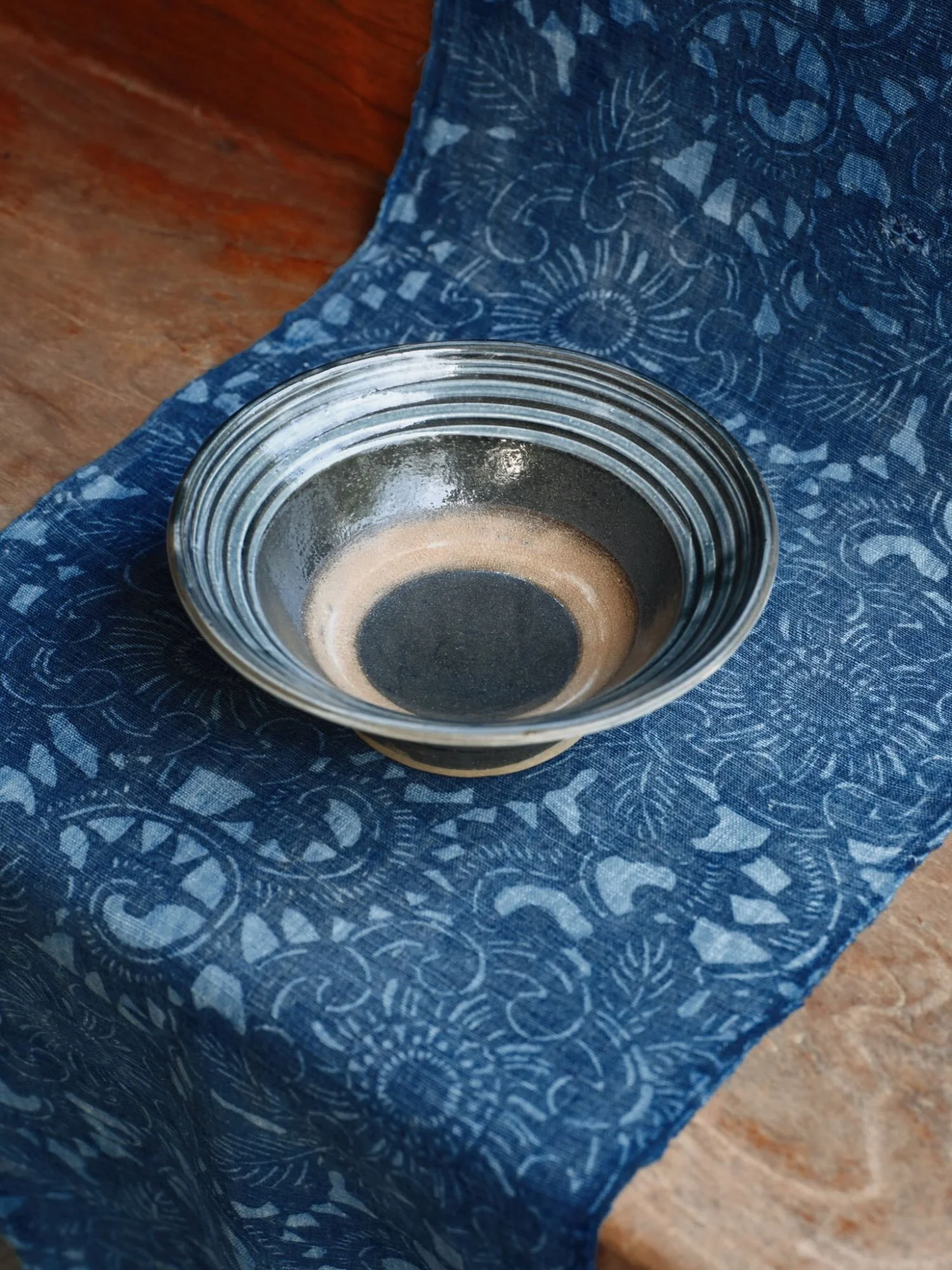 Image 1 of 6
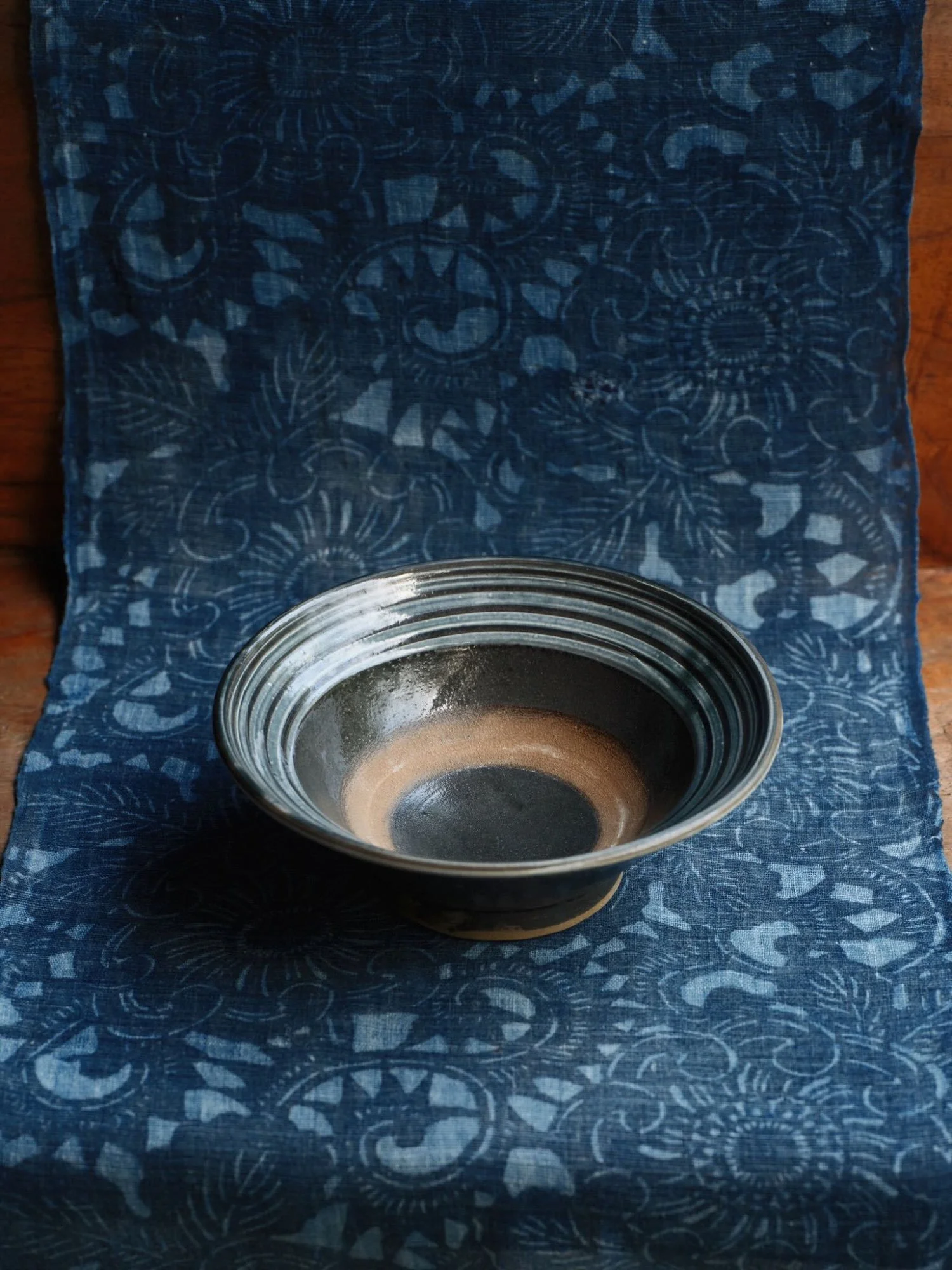 Image 2 of 6
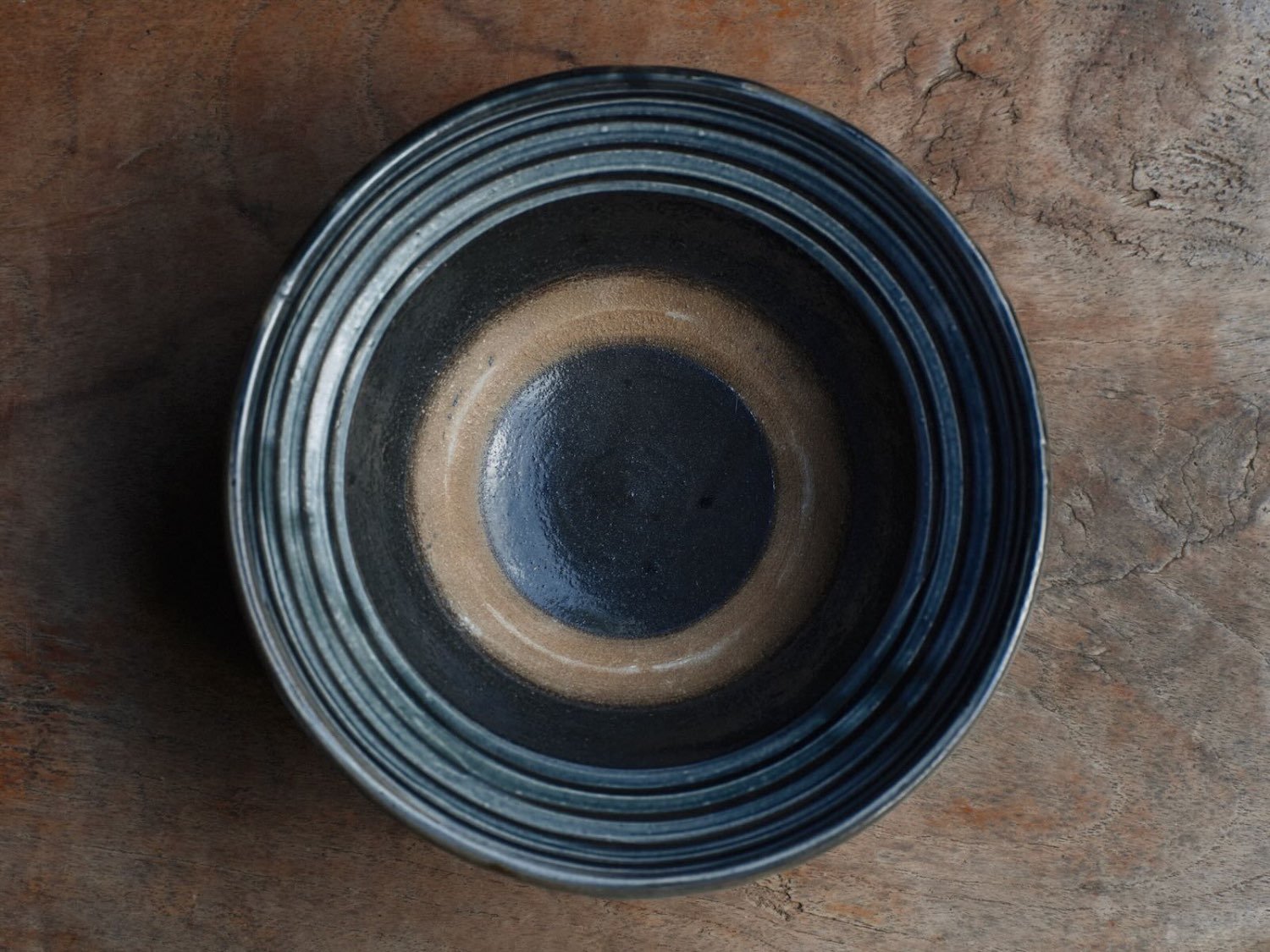 Image 3 of 6
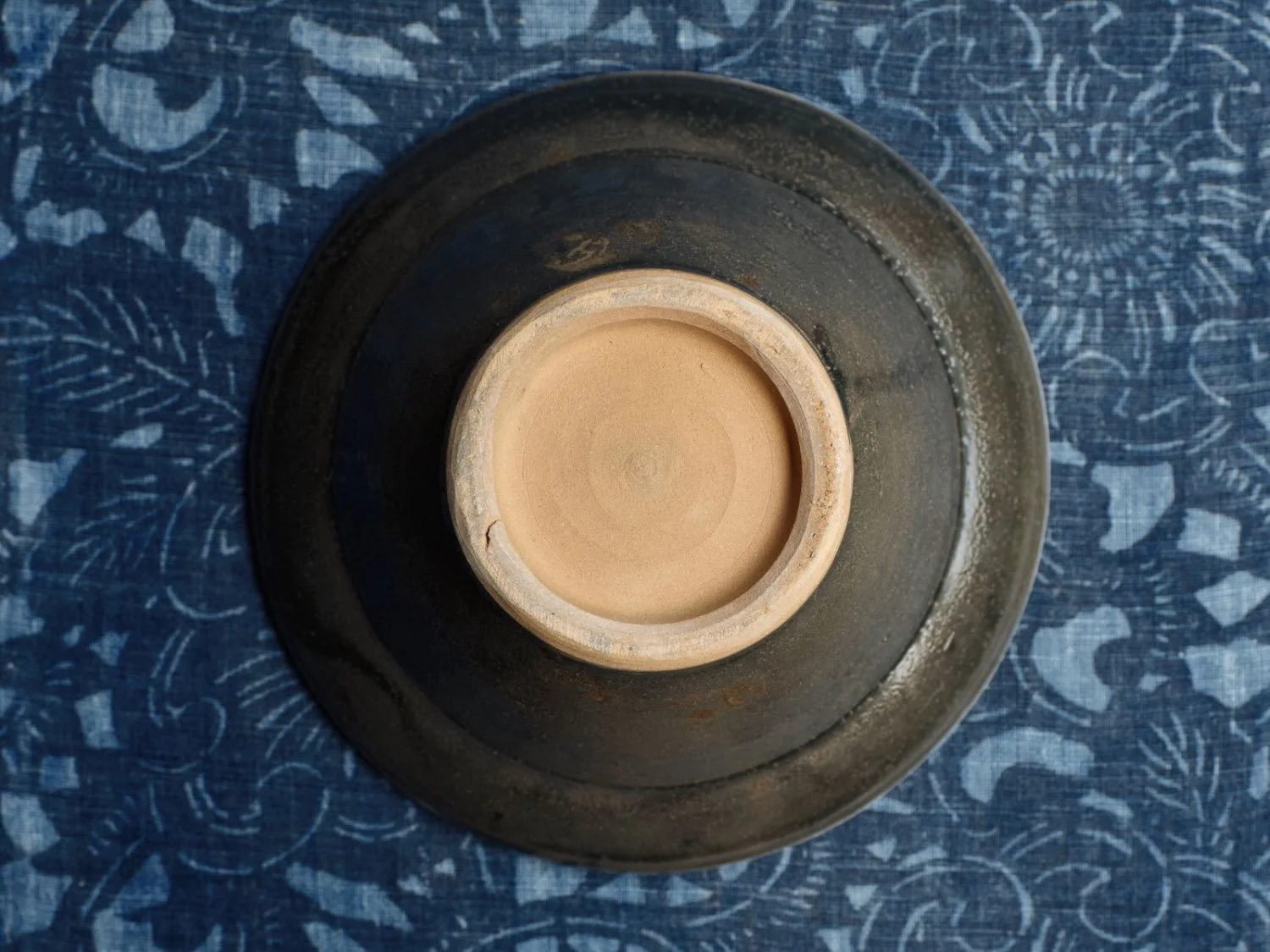 Image 4 of 6
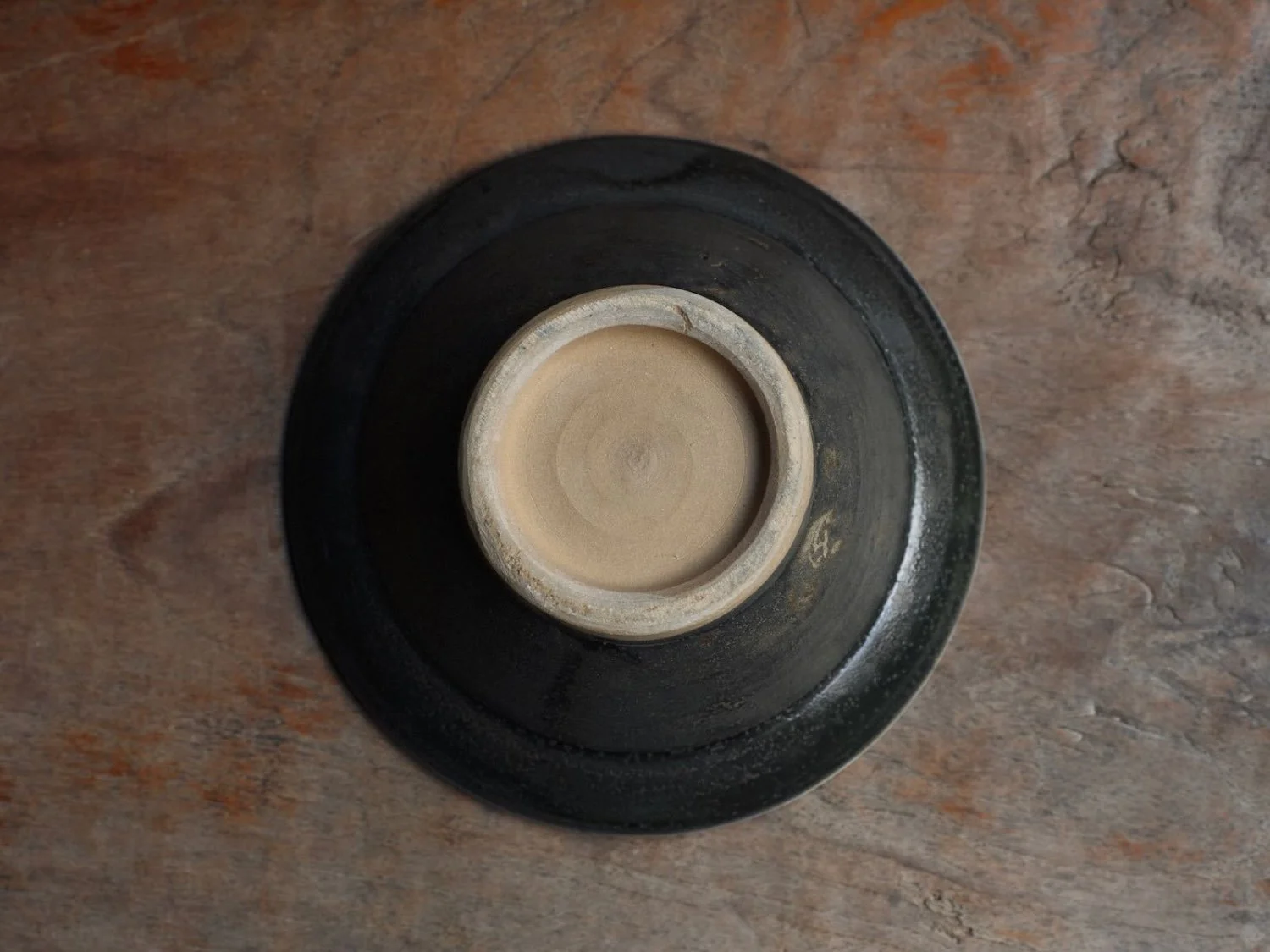 Image 5 of 6
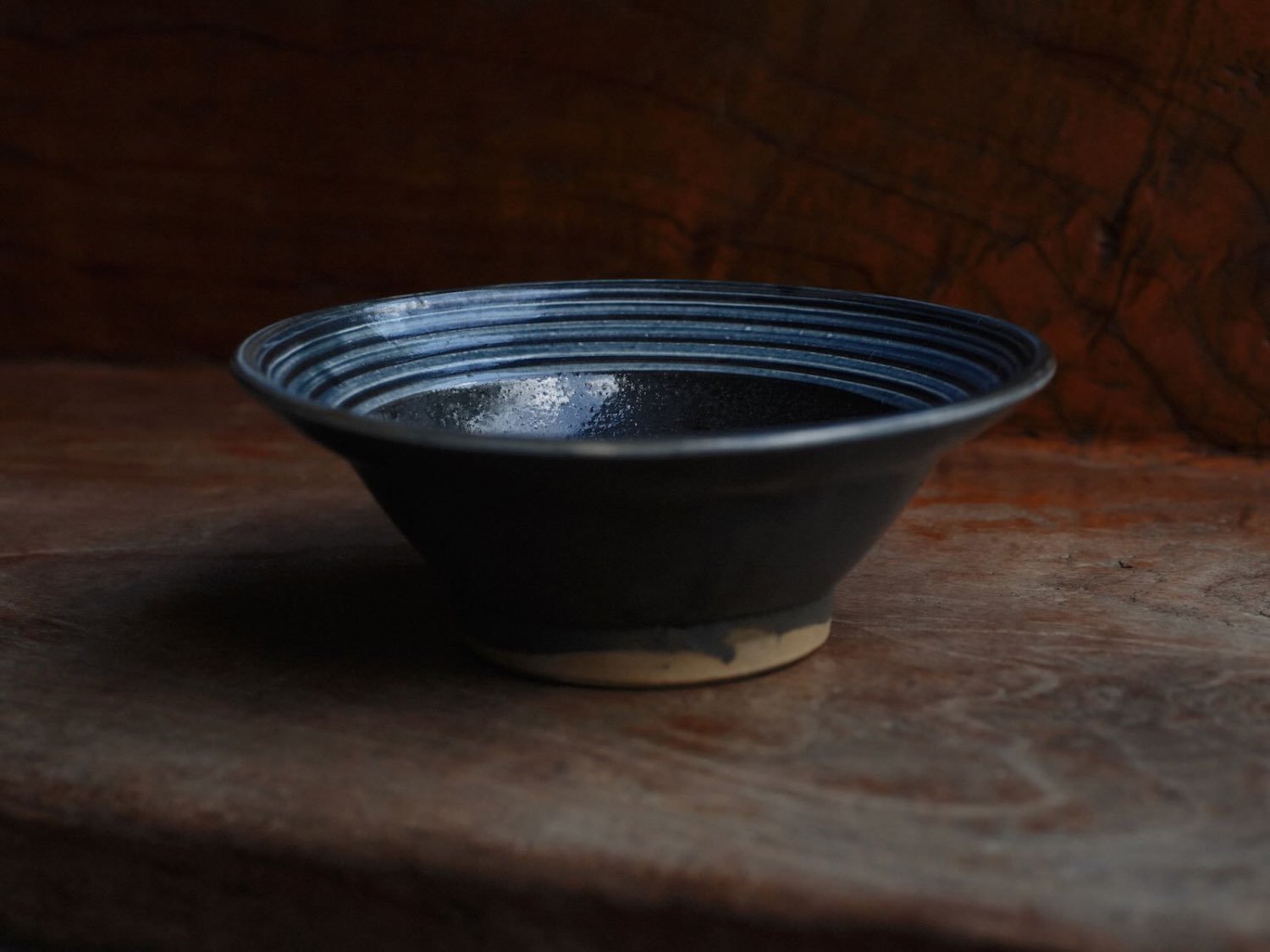 Image 6 of 6