This Shigaraki ware vessel once played a quiet and important role in the forests of Japan. Likely used to distill pine oil, known in Japanese as matsuyani (松脂), it bears beautiful marks as a legacy of its use: a shaped spout to guide the flow of thick oil, burn marks from sustained heat, and residues left by the resin over time. All have bonded with the ceramic.
Pine-derived products were central to daily life during the Edo period (1615–1868). Pine oil served as a disinfectant and a source of light, pine tar waterproofed boats and ropes, and rosin was used in lacquer, varnish, and ink. Craftspeople and apothecaries relied on these products, sourcing their raw material through resin tapping, a seasonal practice of making careful V-shaped incisions in the bark of Pinus densiflora, the Japanese red pine, during the warm months of spring and summer.
Shigaraki ware, produced in Shiga Prefecture east of Kyoto for over 800 years, was the natural companion to this craft. Its strength, density, and resistance to high temperatures made it ideally suited to the demands of distillation.
In the East Asian tradition, pine trees, with their enduring green and steadfast presence, have long represented resilience and longevity. Holding this vessel invite us to reflect on the relationship between people, objects, and nature. Its shape tells a story of resilience, of pine trees standing through the seasons, of artisans shaping earth and fire, and of the enduring beauty found in purposeful things.
This Shigaraki ware vessel once played a quiet and important role in the forests of Japan. Likely used to distill pine oil, known in Japanese as matsuyani (松脂), it bears beautiful marks as a legacy of its use: a shaped spout to guide the flow of thick oil, burn marks from sustained heat, and residues left by the resin over time. All have bonded with the ceramic.
Pine-derived products were central to daily life during the Edo period (1615–1868). Pine oil served as a disinfectant and a source of light, pine tar waterproofed boats and ropes, and rosin was used in lacquer, varnish, and ink. Craftspeople and apothecaries relied on these products, sourcing their raw material through resin tapping, a seasonal practice of making careful V-shaped incisions in the bark of Pinus densiflora, the Japanese red pine, during the warm months of spring and summer.
Shigaraki ware, produced in Shiga Prefecture east of Kyoto for over 800 years, was the natural companion to this craft. Its strength, density, and resistance to high temperatures made it ideally suited to the demands of distillation.
In the East Asian tradition, pine trees, with their enduring green and steadfast presence, have long represented resilience and longevity. Holding this vessel invite us to reflect on the relationship between people, objects, and nature. Its shape tells a story of resilience, of pine trees standing through the seasons, of artisans shaping earth and fire, and of the enduring beauty found in purposeful things.

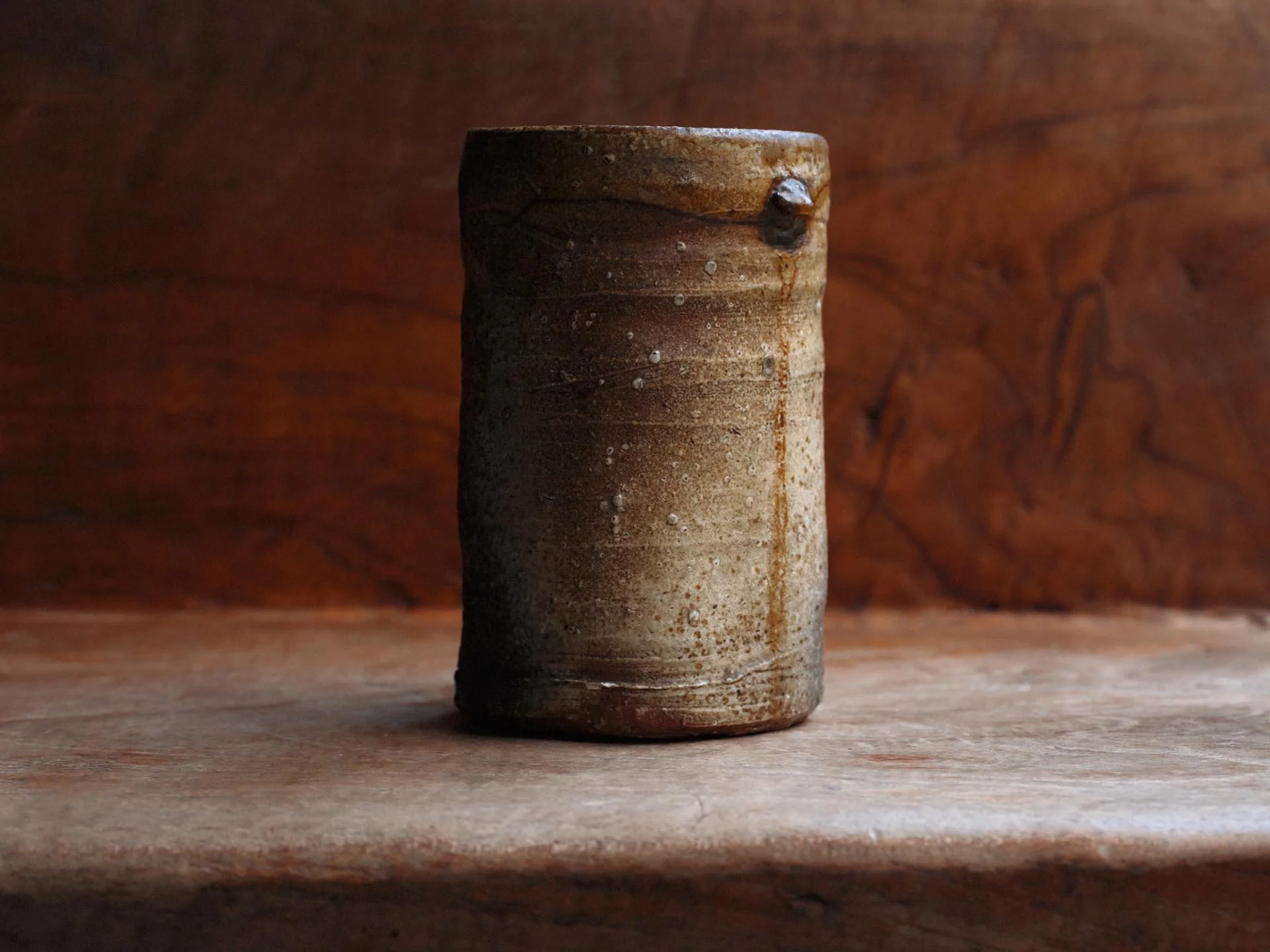 Image 1 of 3
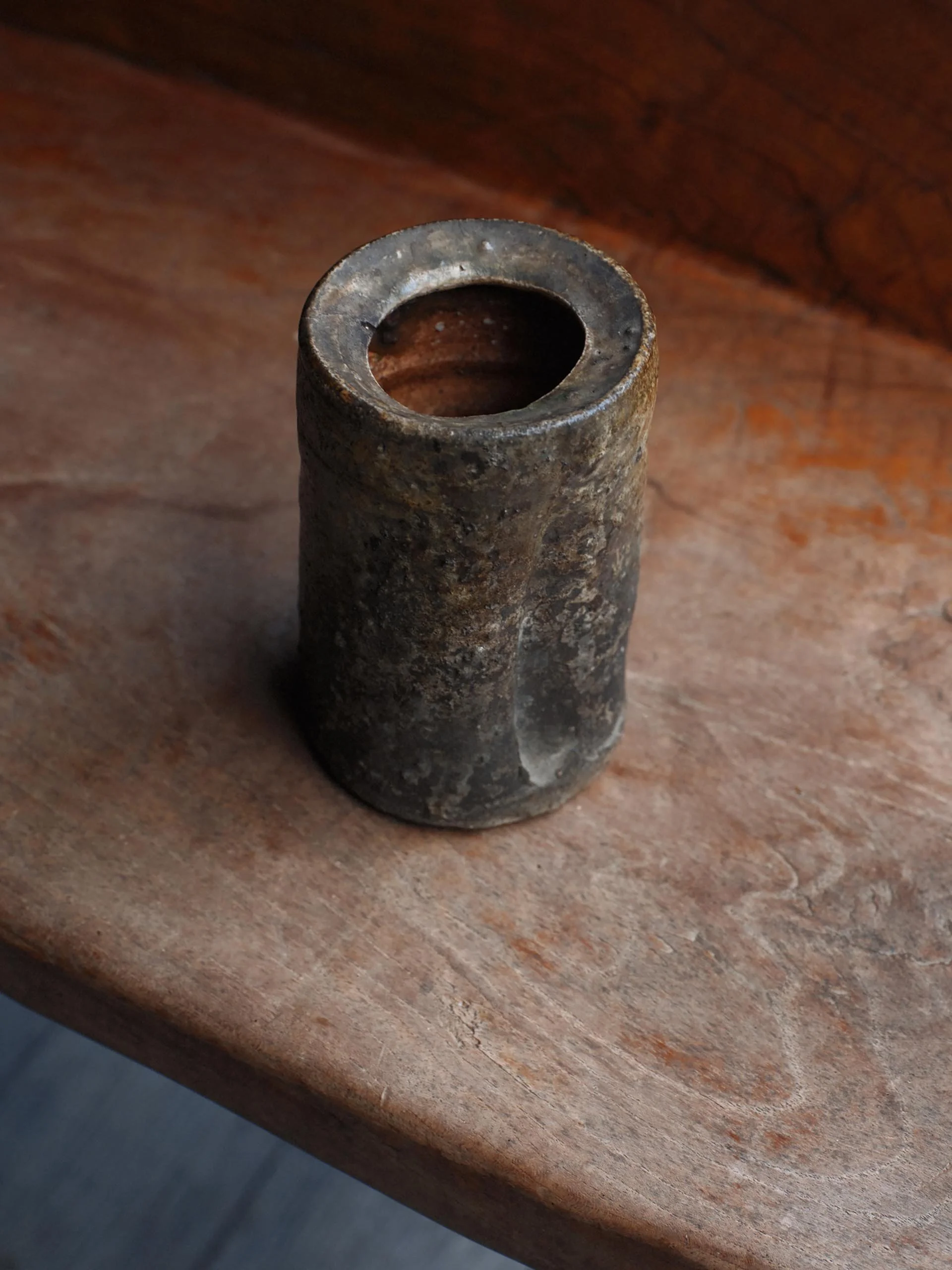 Image 2 of 3
 Image 3 of 3