This set of Japanese vessels tells a story of resilience and renewal. Once broken, each piece has been repaired using the kintsugi technique where lacquer mixed with powdered gold highlights the lines of restoration rather than concealing them.
The green vessel, joined with a gold line, is an early 17th-century example of Karatsu ware from Saga Prefecture. Its glaze and form reflect the understated beauty for which Karatsu ware is known. Karatsu ceramics emerged during a pivotal era overlapping with the rise of Arita ware, the first porcelain produced in Japan.
The white vessel is from the Seto region of Aichi Prefecture, dating back to the 18th or 19th century and made from the region’s fine clay and finished with a simple ash glaze. This type of ware was once produced in great numbers and few have endured. Today, such vessels are used for serving sake or tea. Their quiet forms carry the memory of hands and gatherings.
Together, these vessels invite us to reflect on the beauty of imperfection and the value of restoration. Through kintsugi, their stories continue, reminding us that what is mended can become more meaningful and that the marks of time and usage are to be honored.
This set of Japanese vessels tells a story of resilience and renewal. Once broken, each piece has been repaired using the kintsugi technique where lacquer mixed with powdered gold highlights the lines of restoration rather than concealing them.
The green vessel, joined with a gold line, is an early 17th-century example of Karatsu ware from Saga Prefecture. Its glaze and form reflect the understated beauty for which Karatsu ware is known. Karatsu ceramics emerged during a pivotal era overlapping with the rise of Arita ware, the first porcelain produced in Japan.
The white vessel is from the Seto region of Aichi Prefecture, dating back to the 18th or 19th century and made from the region’s fine clay and finished with a simple ash glaze. This type of ware was once produced in great numbers and few have endured. Today, such vessels are used for serving sake or tea. Their quiet forms carry the memory of hands and gatherings.
Together, these vessels invite us to reflect on the beauty of imperfection and the value of restoration. Through kintsugi, their stories continue, reminding us that what is mended can become more meaningful and that the marks of time and usage are to be honored.

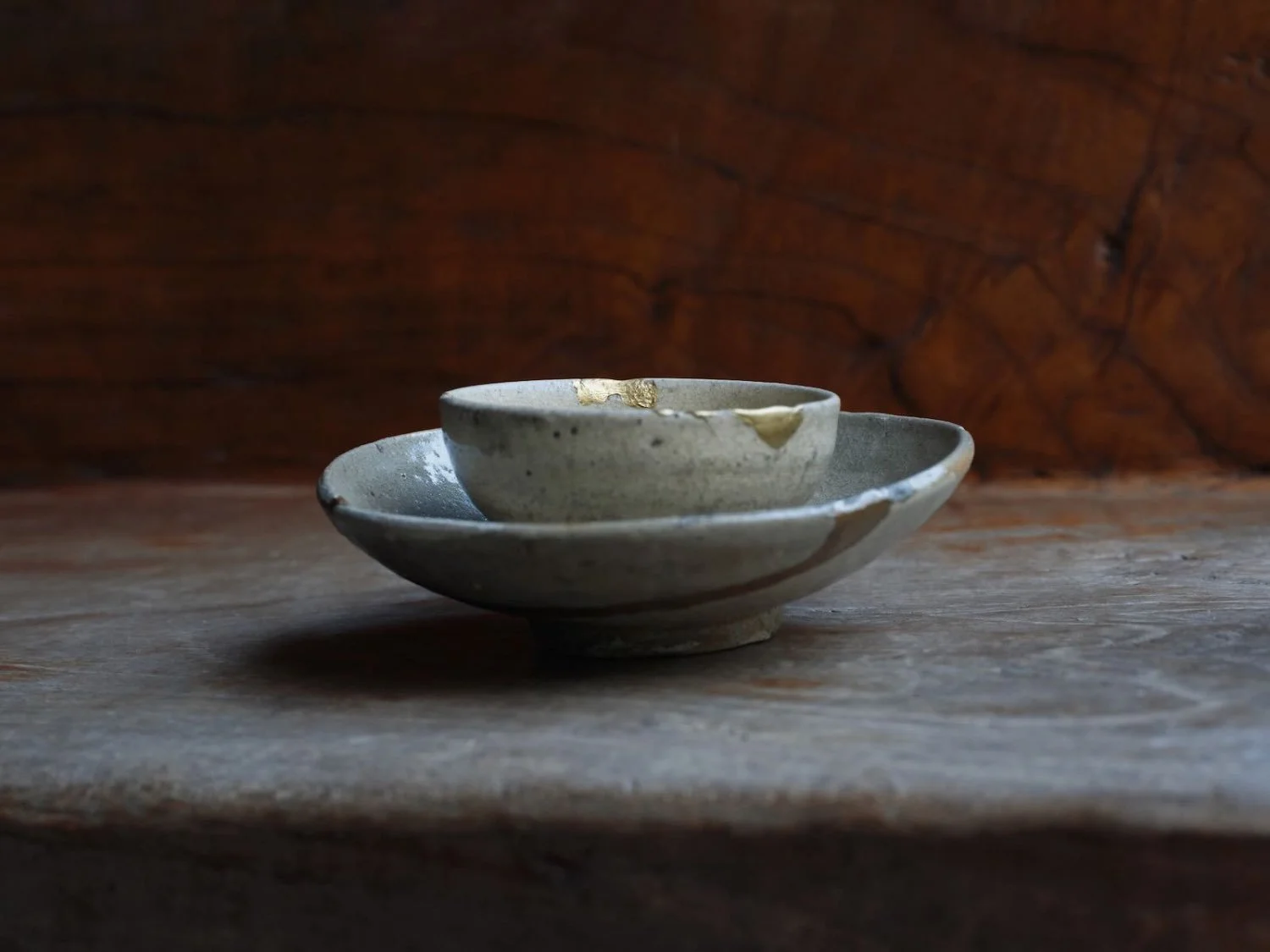 Image 1 of 8
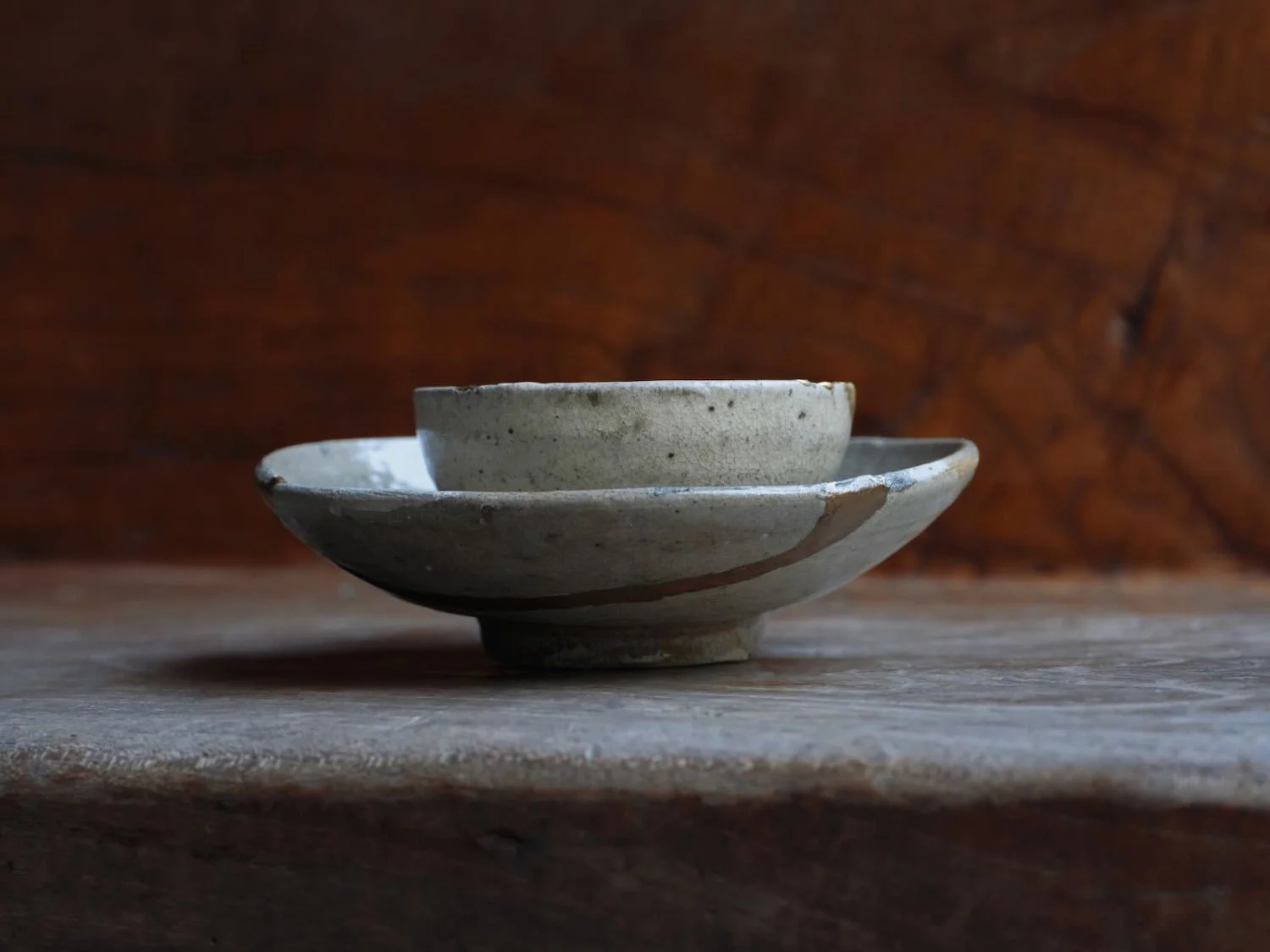 Image 2 of 8
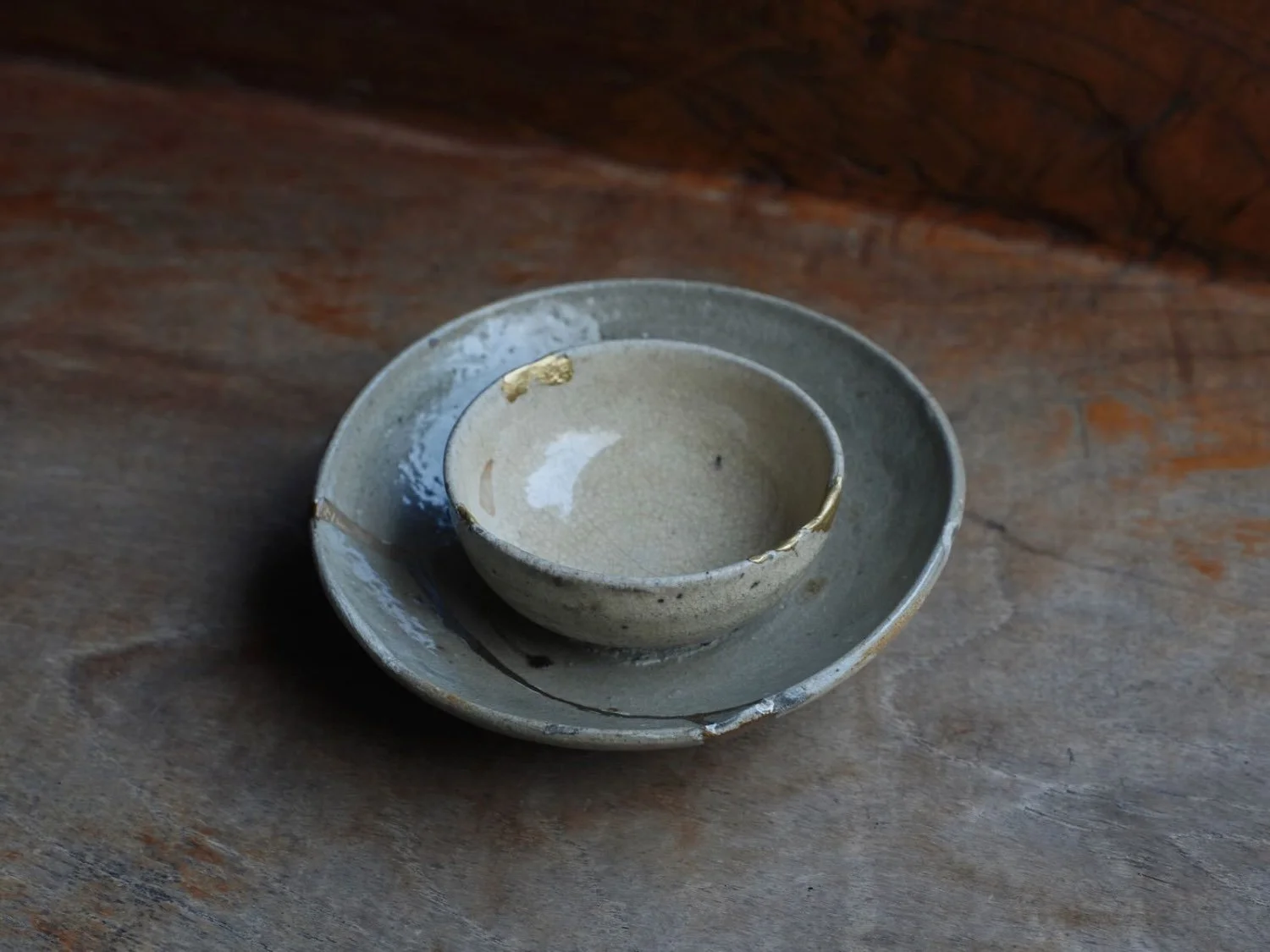 Image 3 of 8
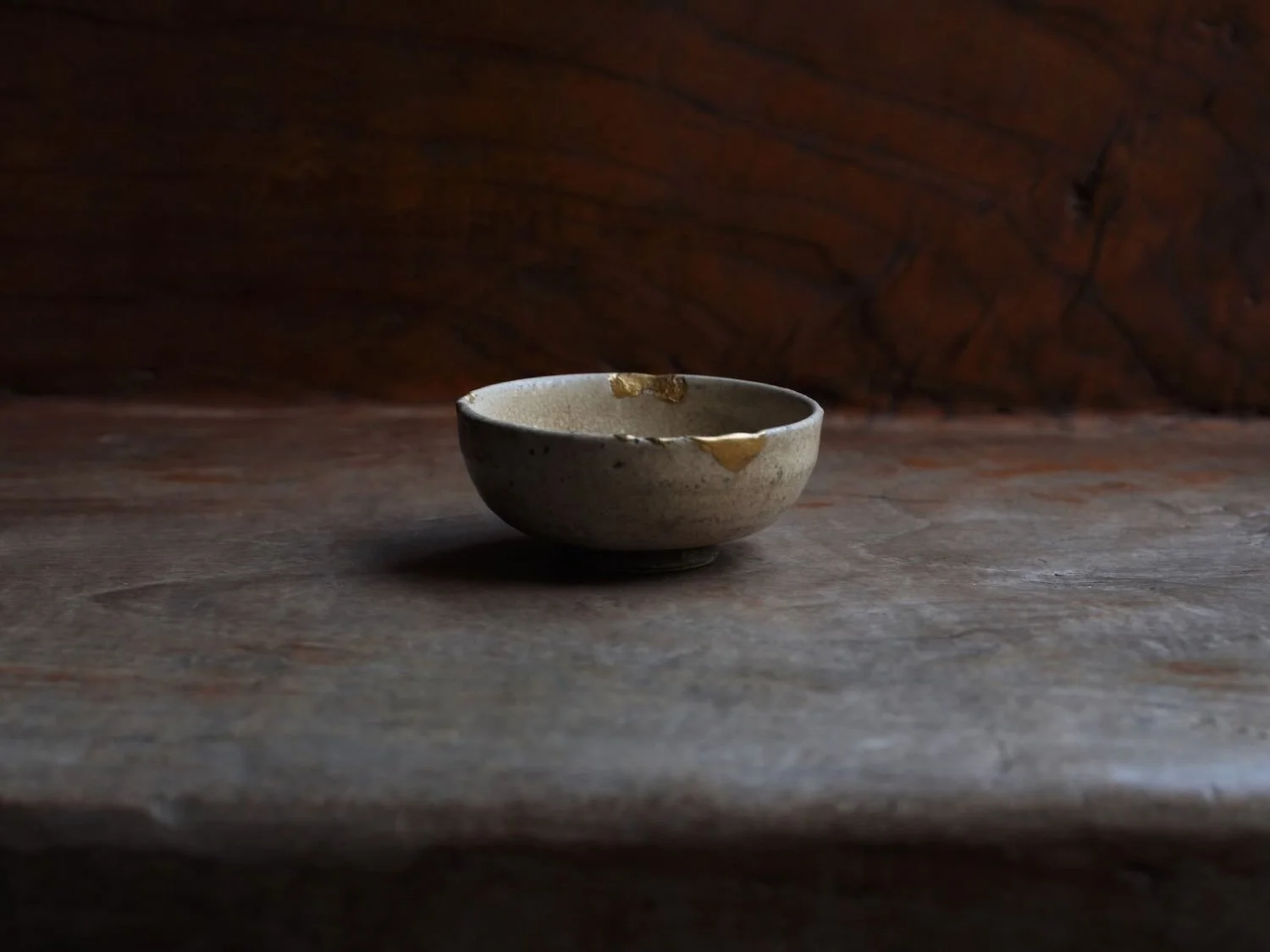 Image 4 of 8
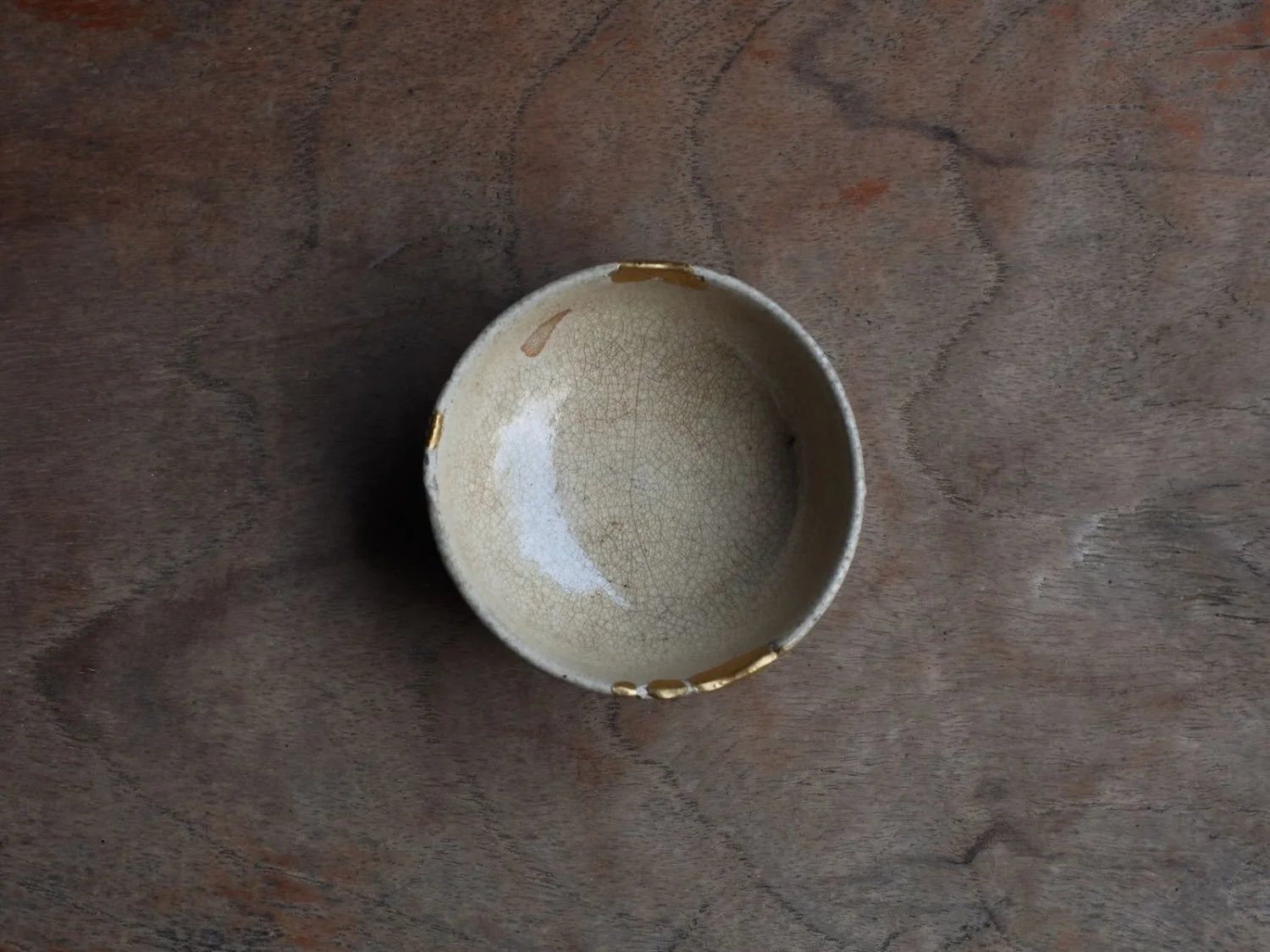 Image 5 of 8
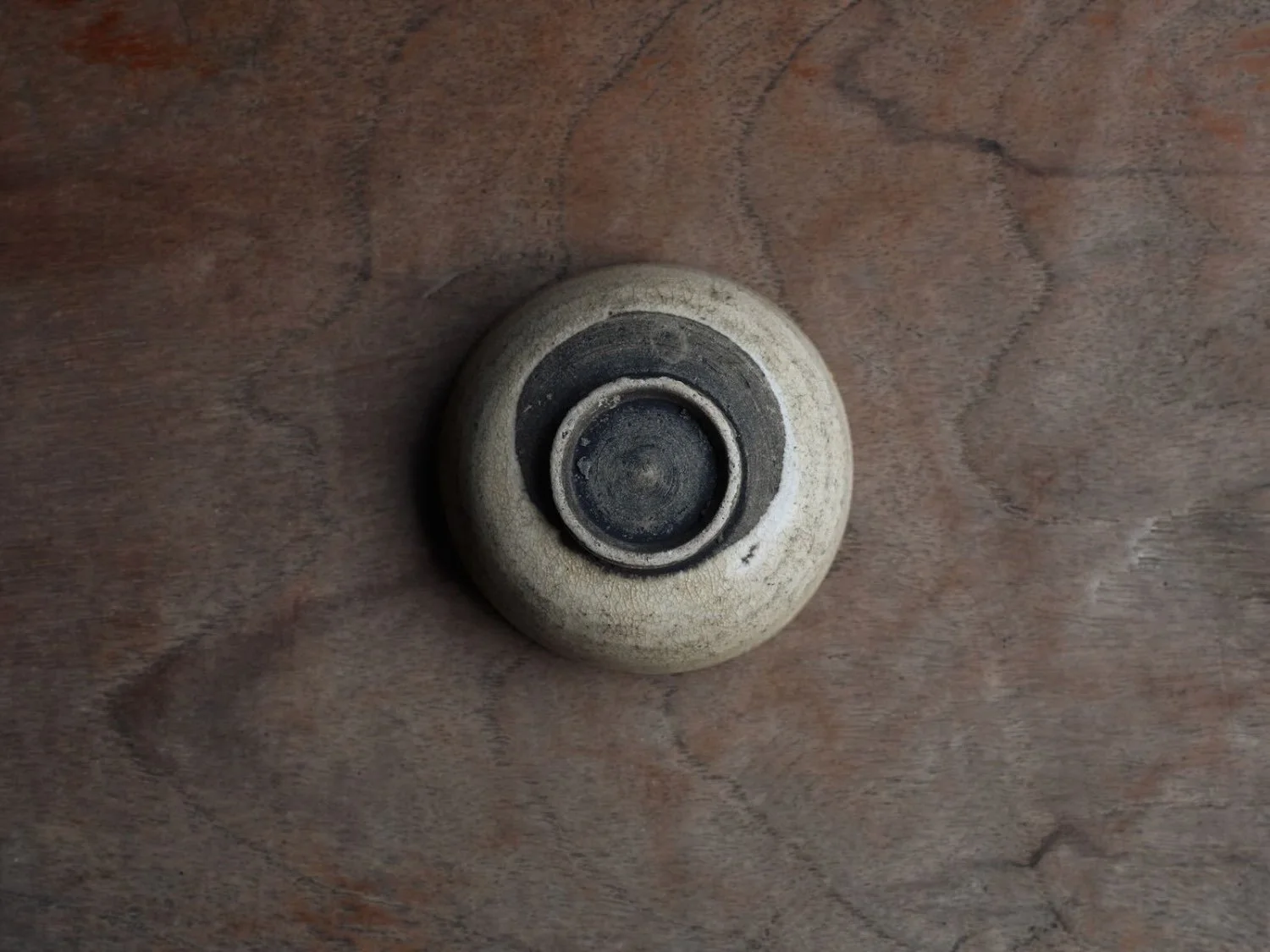 Image 6 of 8
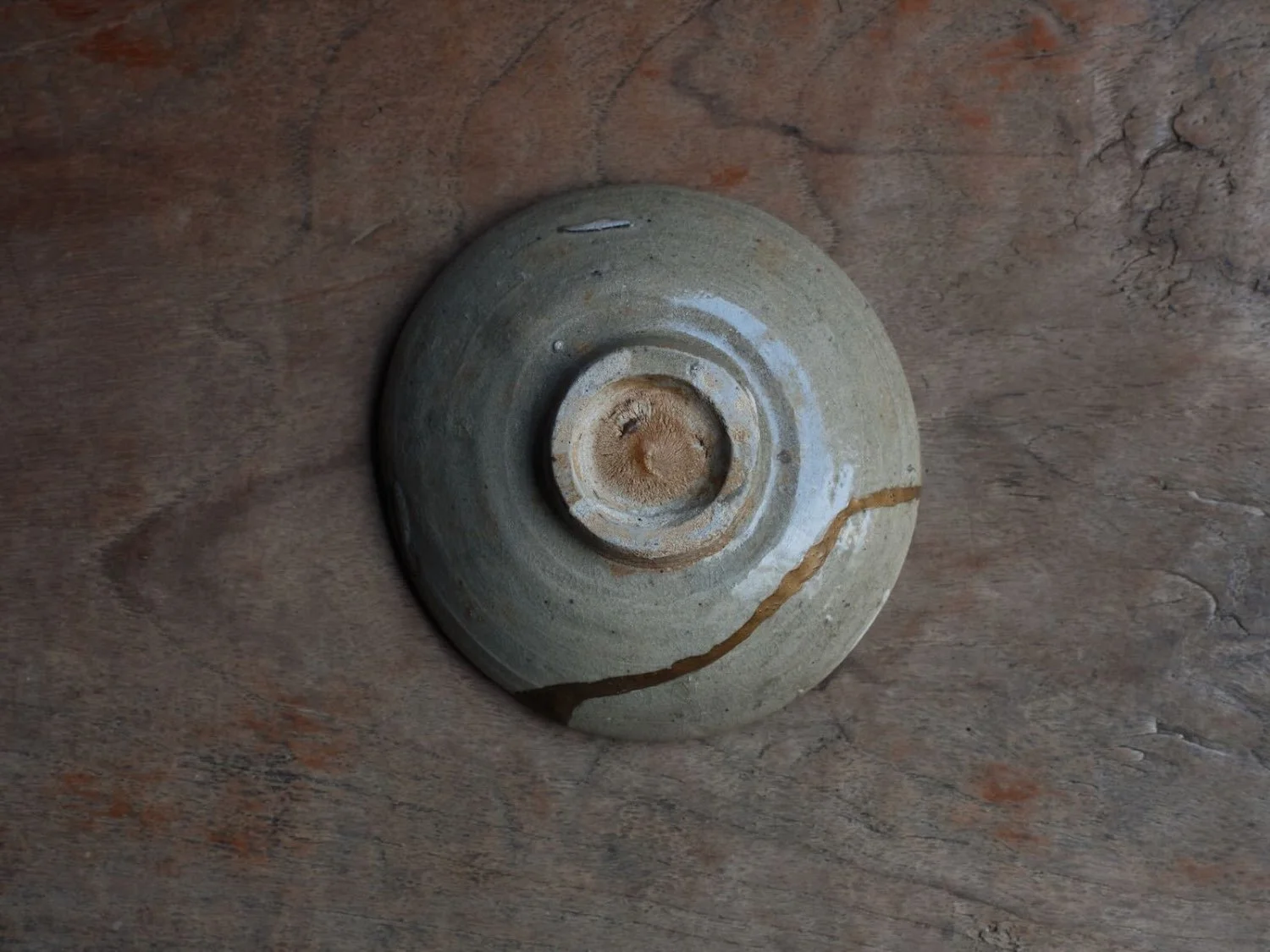 Image 7 of 8
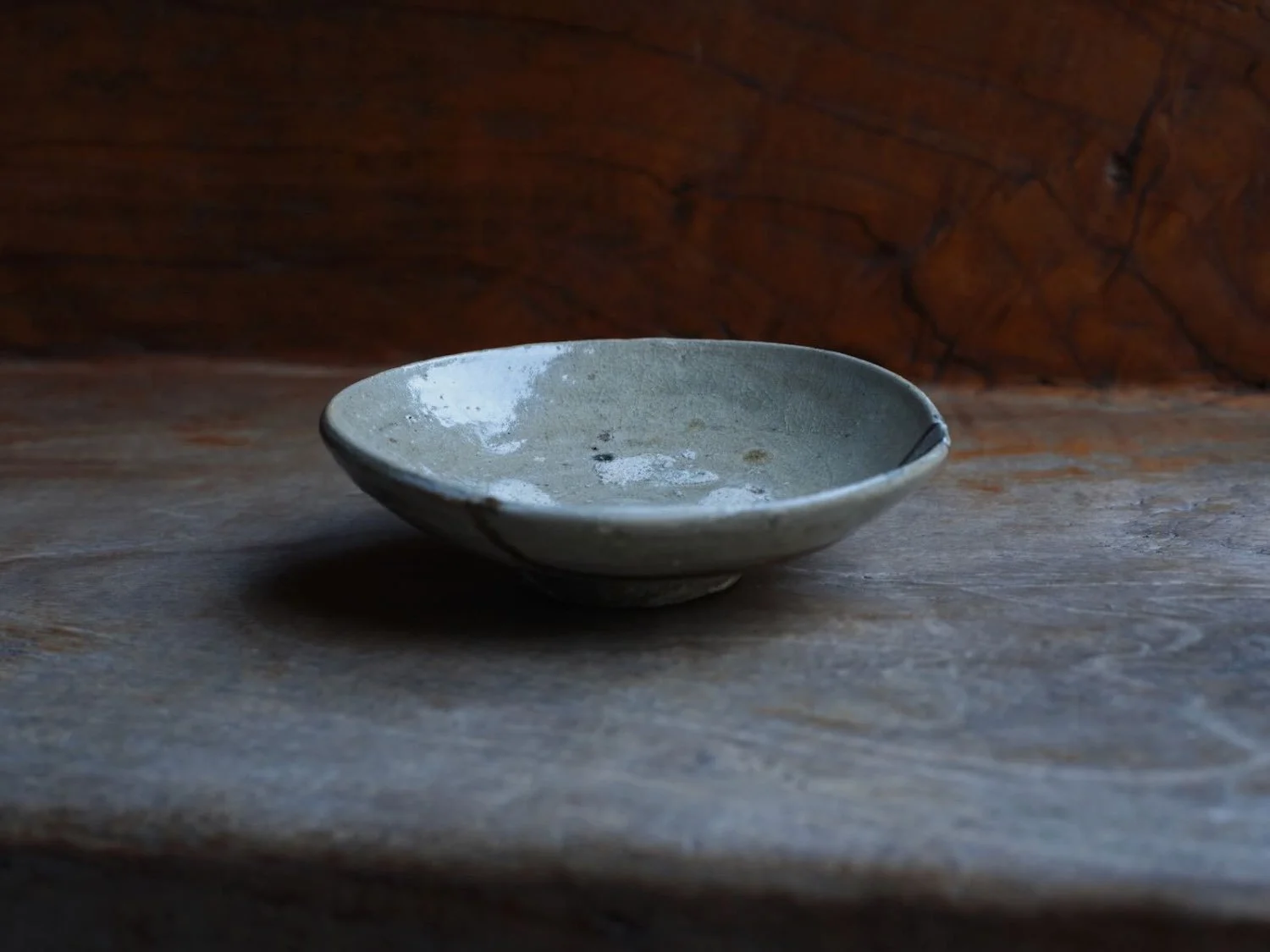 Image 8 of 8