
Textiles from Indonesia, Stories Woven Through Threads
Handwoven Textiles from Indonesia, Rich with Meaning
Indonesia’s textiles carry the quiet rhythm of islands, threads dyed by hand, patterns shaped by traditions and culture, and stories passed through generations. In this curation, maison tombo features special and unique pieces that honour traditions, savoir-faire and memories.
Many of these pieces have been woven as ikat, a technique where fibres are dyed before they are woven with patience, allowing motifs and patterns to emerge slowly. The result is a piece of cloth with gentle softness and depth of character that come from time, dedication and skilled hands.
Each textile reflects the heritage of its origin, from earthy natural dyes to motifs inspired by island landscapes, rituals and everyday life. These traditional Indonesian textiles invite us to pause, to see the beauty in imperfection, and to appreciate the craft that connects the makers to wearers across distance and time.
Here, every piece carries a quiet story. All you need to do is unfold it.

This large Indonesian textile is a handwoven cotton ikat, colored with natural indigo dyes using traditional techniques. The weavers have created a motif with endless stars edged by horses that evoke the afterlife, the realm of waiting, or simply the world of dreams.
In Indonesia, the creation of an ikat is a meaningful process, traditionally carried out by women. Each piece can take several months to complete, with the weaving often accompanied by rituals and ceremonies that honor the skills of the craftswomen, their community and ancestors.
This reverence is woven into the threads imbuing the textile with a sense of continuity and respect for tradition. Despite its weight, this ikat remains soft and comforting to the touch, a testament to both the quality of the cotton and the care invested in its making.
Perfect as a throw or a wall art, this textile is more than a decorative piece. It is a vessel of stories, symbols, skills offering beauty and a connection to Indonesian heritage.

Ulos is a distinctive handwoven textile made and used by the Batak people of North Sumatra, Indonesia. Batak women are celebrated for their exceptional weaving skills producing ulos with intricate patterns.
This particular ulos stands out for its varying shades of blue accented by white arrow motifs pointing in different directions, a design that reflects the sophistication and the symbolism of Batak culture. This black, blue and white piece is characteristic of an Ulos Sibolang symbolising protection, transition and solemnity. It may have been worn for mourning or daily.
This type of ulos can also be presented during wedding ceremonies, traditionally gifted by the bride’s parents to the groom signifying a wish for harmony, prosperity, and a strong bond between families. Ulos are an essential part of Batak culture, used in ceremonies, rituals and as a symbol of warmth, affection, and social status. They are draped over individuals throughout life during weddings, births, funerals, and other important life events as a symbol of blessing and protection.

This remarkable ikat from Sumba, Indonesia is a woven narrative telling the story of the burial of King Honda Rangga and Queen Rau Patuala. The fabric’s intricate patterns in natural dye indigo capture the solemnity and unity of the funeral parade, where people join hands and march together symbolizing collective respect. Each animal depicted on the cloth carries a specific meaning. The horse serves as the spiritual vehicle, carrying the souls of the Royals to the afterlife. The buffalo represents provision, transporting supplies needed for the journey beyond. The crocodile & the turtle are allusions to the King and Queen themselves. In Sumbanese tradition, naming the deceased directly is avoided out of respect. These animals respectfully honor their memory.
This fabric is the result of months of dedicated work by skilled women weavers. The detail and precision reflect technical mastery and a deep connection to ancestral stories and rituals. The weavers have paired this ikat with two meaningful verses. Pai kilikukur means to parade around like a coiled eel evoking the image of the community moving in unity around the tomb in a protective and ceremonial motion. Tuna wiliwunjilu means "heaven and earth being under one creator”, a verse that refers to humanity and nature being under a divine order that connects all things.
Soft to the touch and powerful in its storytelling, this ikat is a testament to Sumbanese culture. It invites us to reflect on the ways textiles can carry memory, honor the departed and celebrate the bonds between people and the world beyond.

This ikat textile was handwoven with white cotton threads in Sumba using traditional techniques. In Sumba, colors and motifs in textiles indicate social hierarchy. Colors like indigo and red are often linked to nobility. White patterns denote high rank or are reserved for special occasions.
We partnered with a natural dye studio in Indonesia to create this unique piece in deep indigo blue. The indigo hue, rich and luminous, brings a new dimension to the fabric. Each thread absorbing the dye in its own way and creating subtle variations that make this piece unique. Indigo, a natural dye, develops its deep blue through repeated dips and oxidation. The number of dips, the concentration of the dye, and the artisan’s individual technique affect the final shade and tone.
This layering process gives each textile a unique depth and vibrancy, with nuanced shifts in blue that cannot be replicated by machine dyeing. This textile is soft to the touch. Its gentle texture invites the hand and offers comfort.

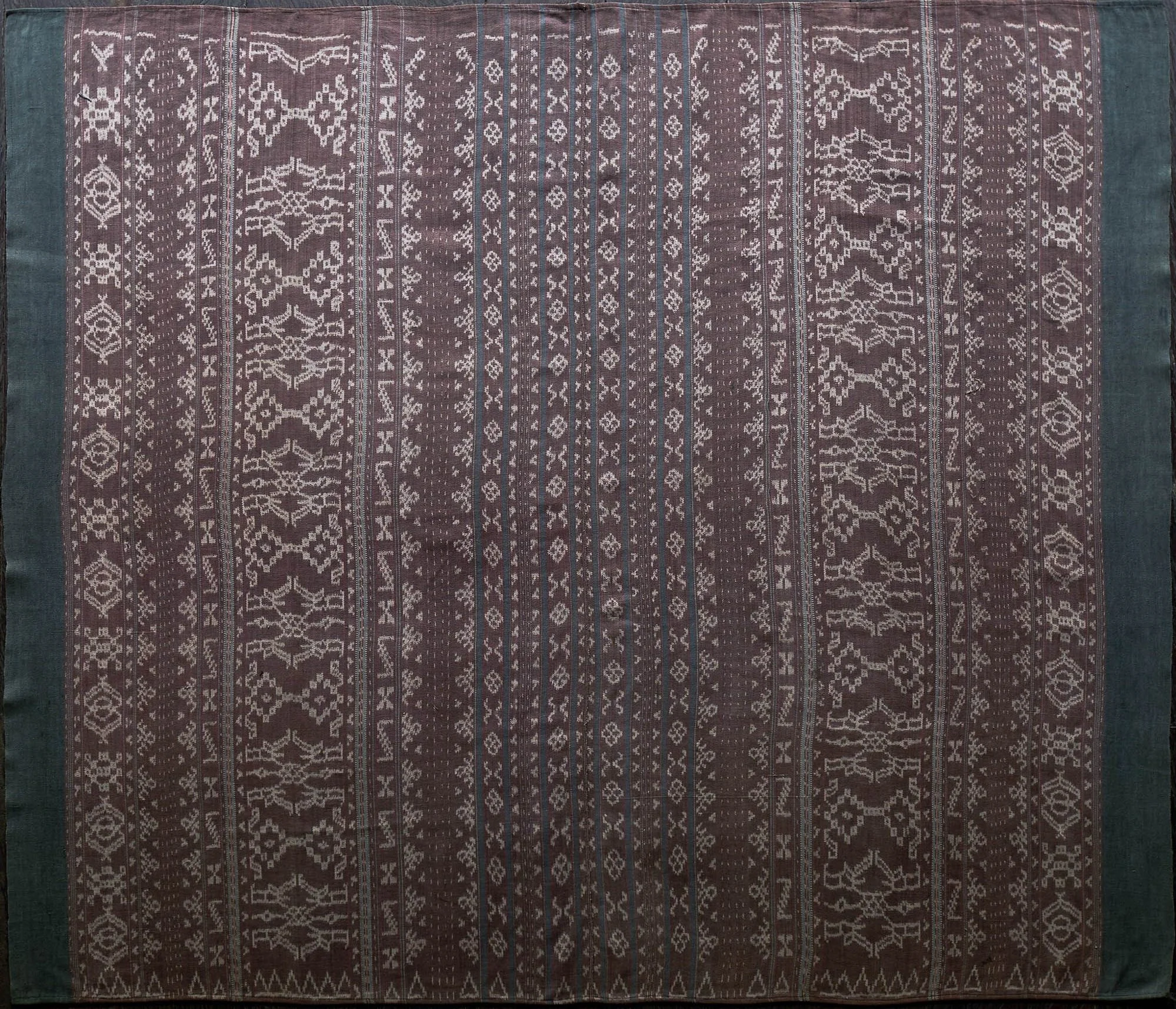
This three-panel thick ikat textile has a banded geometric design composed of small motifs in red and white set against a deep purple black background. It was produced by overdyeing the red morinda roots with the blue indigo plant to achieve a nuanced depth of color. It may have been a part of a woman lawo sarong.
This textile originates from the region of Ende in the island of Flores, Indonesia where motifs are predominantly abstract. Each side panel features narrower bands that echo the central panel establishing a balance across the fabric.
This repetition of pattern and proportion invites the eye to move gently along the panels to appreciate subtle variations.
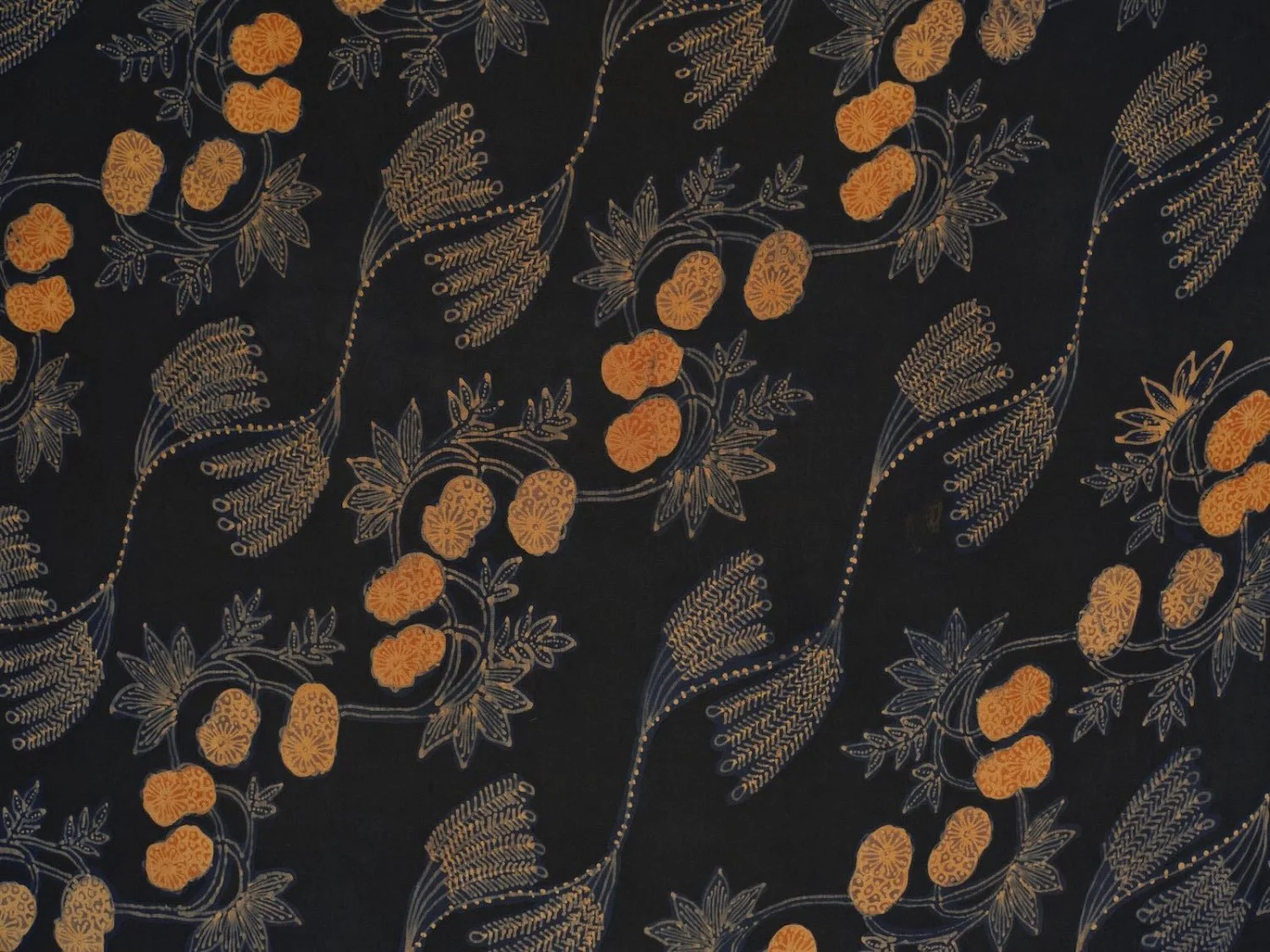
This handcrafted batik on silk quietly embodies the rich cultural heritage of Pekalongan, a city in Central Java often called the Batik City. Created with natural dyes and careful hand-painting, this piece capture the spirit of traditional craftsmanship, offering a luxurious and softly textured finish that invites touch and contemplation.
Pekalongan batik carries a character all its own, distinct from the neighboring styles of Yogyakarta and Solo. Its deeper backgrounds and vivid, nature-inspired motifs reflect a tapestry of influences—Dutch, Chinese, and Japanese—woven together by generations of artisans. The intricate depictions of flora and fauna found in Pekalongan batik speak to a timeless elegance, where each pattern tells a story shaped by both place and history.
This particular batik features hibiscus flowers, or kembang sepatu, cherished throughout Indonesia. The vibrant red hibiscus, in particular, holds special meaning in Balinese offerings and prayers, symbolizing courage and devotion.

This traditional Indonesian ikat celebrates women and femininity, expressed through delicate floral patterns surrounding the central motif known as Mamuli. In Sumbanese culture, the Mamuli carries profound meaning, symbolizing beauty, fertility, and the life-giving power of birth that sustains humanity. The addition of the patola floral element reinforces the ideas of growth, care, and renewal.
Accompanying this ikat is a verse in the local dialect: Nama Wiawarrung Walla Na, Nama Habarungu Wuana, which translates as Who Spreads Flowers Sows his Seeds. This poetic verse deepens the textile’s celebration of life, honoring the vital role of women in families and communities and suggesting that beauty and generosity are seeds from which the future grows.
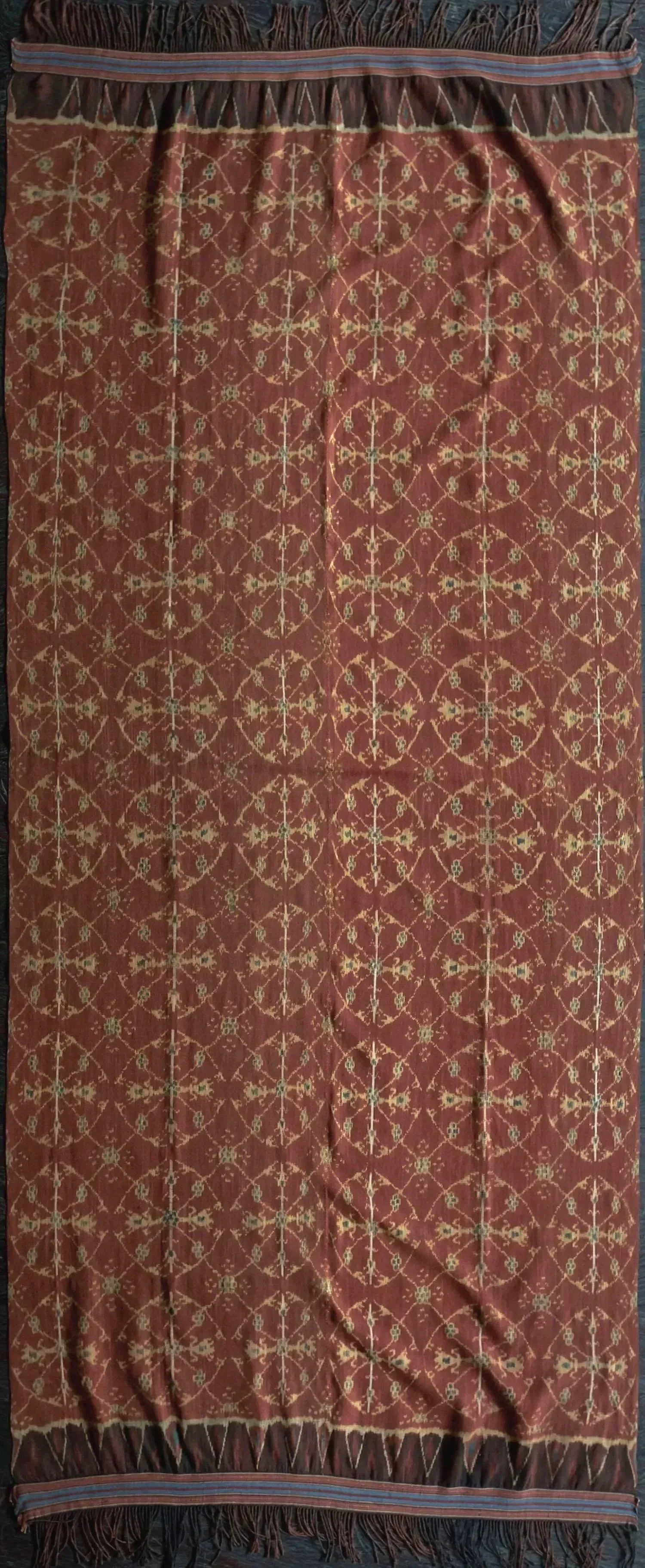
This ikat has been handwoven over several months from cotton dyed with natural colors, honoring traditional weaving techniques. To achieve this distinctive red hue which is characteristic of East Sumba’s ikat textiles, artisans use the roots of the Morinda citrifolia tree (locally called kombu). These are often combined with leaves of Symplocos fasciculata (loba) to intensify brightness and richness. Before dyeing, the fibers are treated with candlenut oil (kemiri) to help the color bind. The process requires pounding the Morinda roots, soaking the tied and dried cloth (hiamba) in the dye bath, and then repeating cycles of dyeing and drying until the cloth reaches the desired depth of red.
This majestic textile echoes the prestige of Indian trade garments once brought to Indonesia by Portuguese and Dutch merchants in the 17th century as gifts for nobility. Traditionally associated with power, the Patola pattern originated in India and influenced Indonesian design traditions across Java, Sumatra, and Bali.
This piece brings a quiet sense of strength, positive energy, and beauty to any space. The Patola flower patterns inspire a feeling of calm and respect. The warm red/orange tone add a soft, uplifting glow to the room. More than just decoration, this textile carries a rich cultural history and the careful work of skilled artisans, offering a meaningful and peaceful presence in a room.
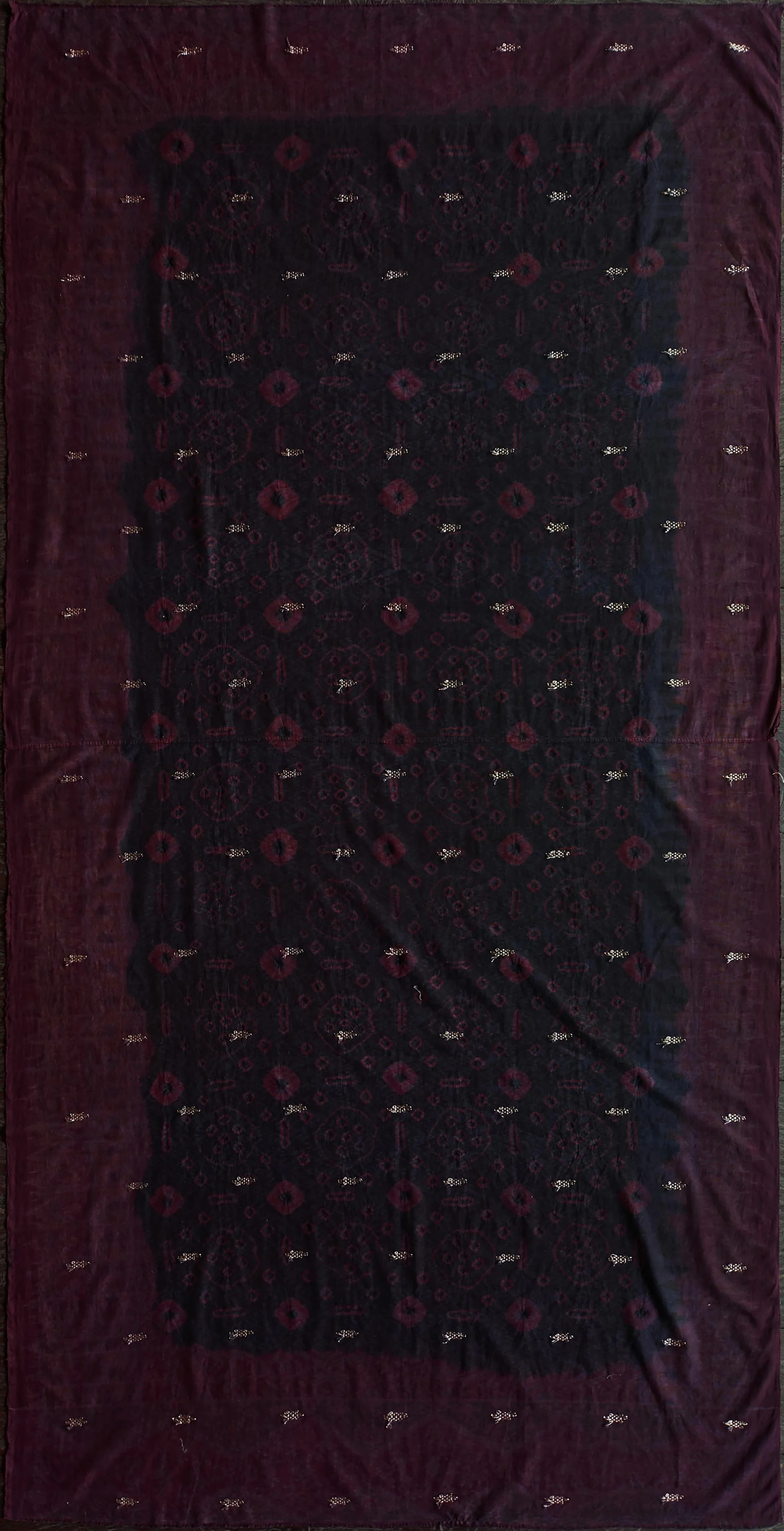
Sized as a traditional sarong and handwoven in fine cotton, this handwoven textile is known as songket in Sumatra. It is a traditional ceremonial garment worn by both men and women for special occasions and rituals across Indonesia and other Asian countries.
This piece has subtle intricated patterns are achieved through the titik tujuh or tie-dye method. Sections are carefully knotted to resist the dye, allowing the artisan to create detailed motifs. Each knot and dye bath adds depth and nuance and results in unique variations.
The gold-threaded like ornaments are a characteristic of Sumatra’s textile heritage. These shimmering patterns trace their origins to past Chinese traders who influenced local artistry and introduced new motifs and techniques. In ancient times, Sumatra was celebrated as the Island of Gold. This island was a crossroads for trade, religions, and ideas that shaped the cultural history of Southeast Asia.
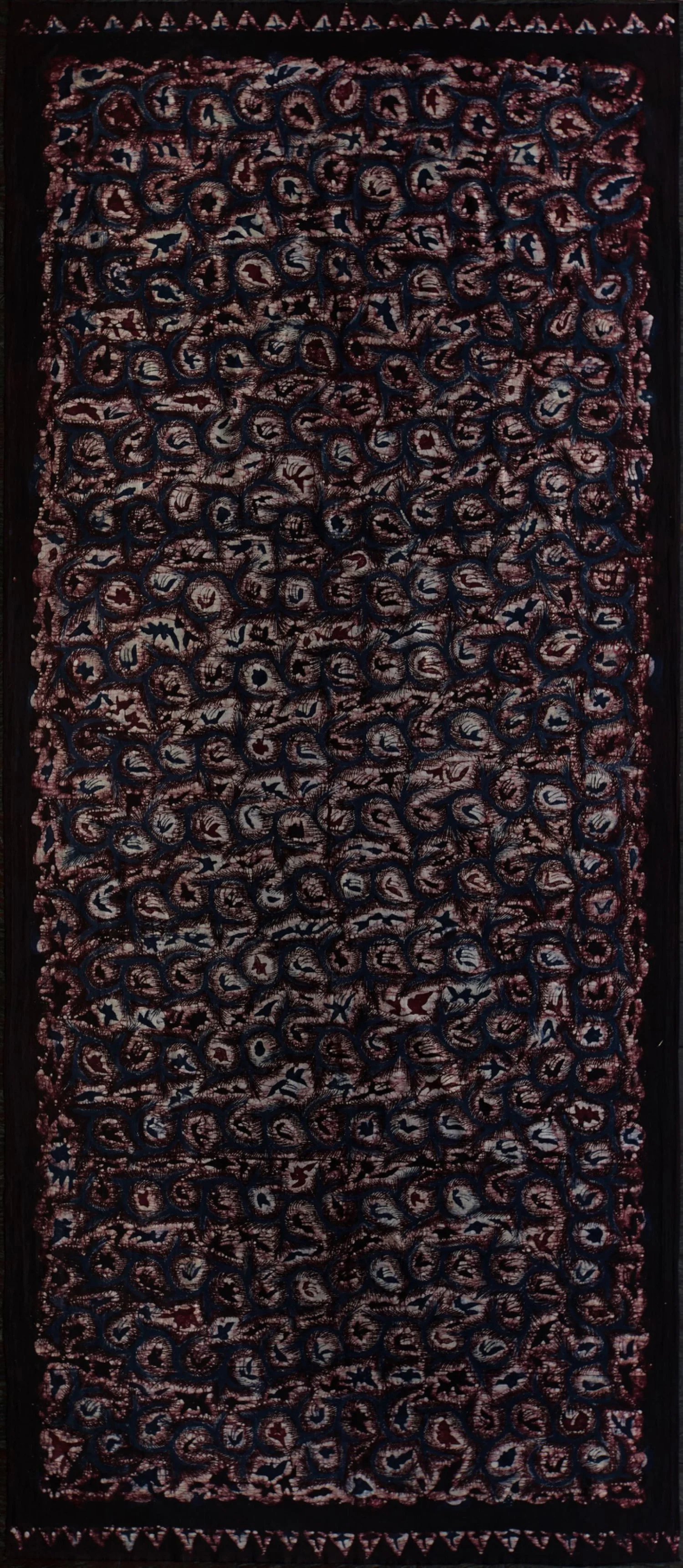
This light cotton textile comes from the Madura region of Indonesia, known for its distinctive color palette and detailed craftsmanship. It was handcrafted over several months using the batik technique, a wax-resist dyeing tradition recognized by UNESCO as a cultural treasure. In Indonesia, batik plays an integral role in daily life, woven into rituals, ceremonies, and celebrations. It maintains a connection between people and nature through its patterns and the natural dyes used.
The batik-making process involves carefully applying molten wax to delicate patterns drawn on the fabric before immersing it in dyes. The motifs in Madura batik typically depict birds, fish, and leaves separated by fine dots and lines known as isen, which give the fabric a rich and intricate texture. This traditional technique requires great care and time, resulting in textiles that are both beautiful and meaningful.
Madura batiks typically feature bold colors for nature motifs, reflecting the character and cultural identity of the Madurese people. The natural red and brown tones of this particular piece are more subdued making it all the more special.
The washed colors of green and pink of this thick and soft double ikat are beautiful witnesses of years of use.
A prominent motif, the naga lalan or dragon footprint, runs through the design of this piece in reference to Flores island’s famous komodo dragons. Handwoven, most likely in the Sikka region, where ikat textiles are known for their striking reds and blacks, this textile features seven distinct bands. Each band carries a specific name and meaning. The most significant bands are called ‘Mother’s elder sister’ followed by ‘Mother’s younger sister’ underscoring the importance of family ties in local tradition.
In Flores, weaving ikat is a highly respected skill often considered essential for women hoping to marry. Creating a single piece can span a decade or more, as the process of dyeing, especially to achieve the deep red from Morinda roots, requires patience, expertise and favorable weather.
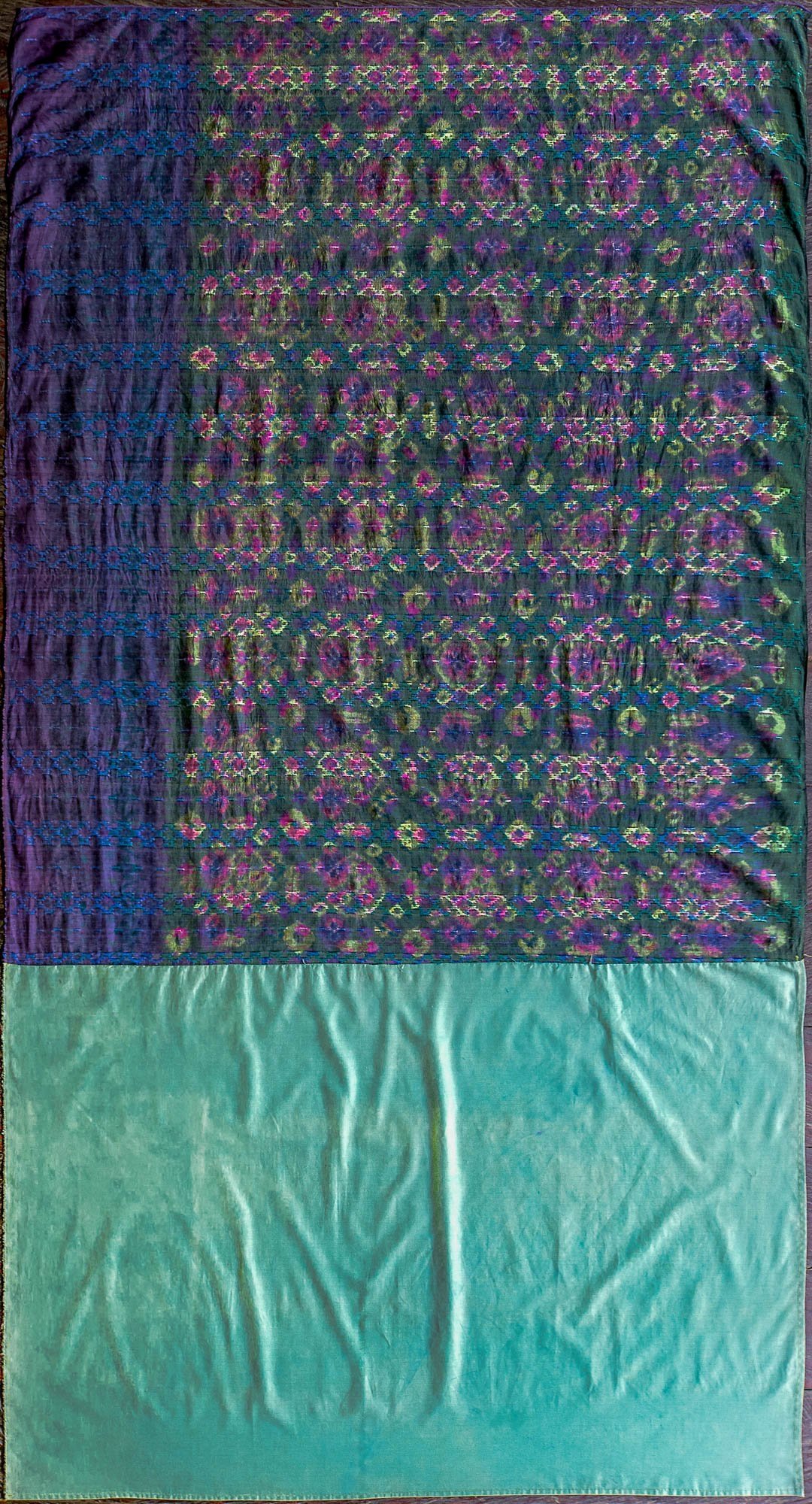
The combination of a refined handwoven silk piece with a simple green cotton piece in this songket from Sumatra, Indonesia, shows the wild beauty of tradition combining the ordinary with the special. The contrast between the refined woven silk part representing a floral motif and a plain green piece of cotton lend the textile a unique character, inviting an appreciation of its texture.
Sized as a traditional sarong, this type of clothing holds a special place in ceremonial life. Worn by both men and women during important occasions across Indonesia and other Asian countries, songket textiles embody rich heritage of craftsmanship and cultural expression.

Woven from thick, high-quality cotton in two nearly indistinguishable shades of green, this fabric showcases subtle beauty upon closer inspection. Its plain surface is smooth and pleasing to the touch, while small frayed tears along the edges lend it a vintage charm as if the cloth tells its own story.
This fabric offers simple, understated elegance, perfect for style and comfort as wall art or versatile home textile.
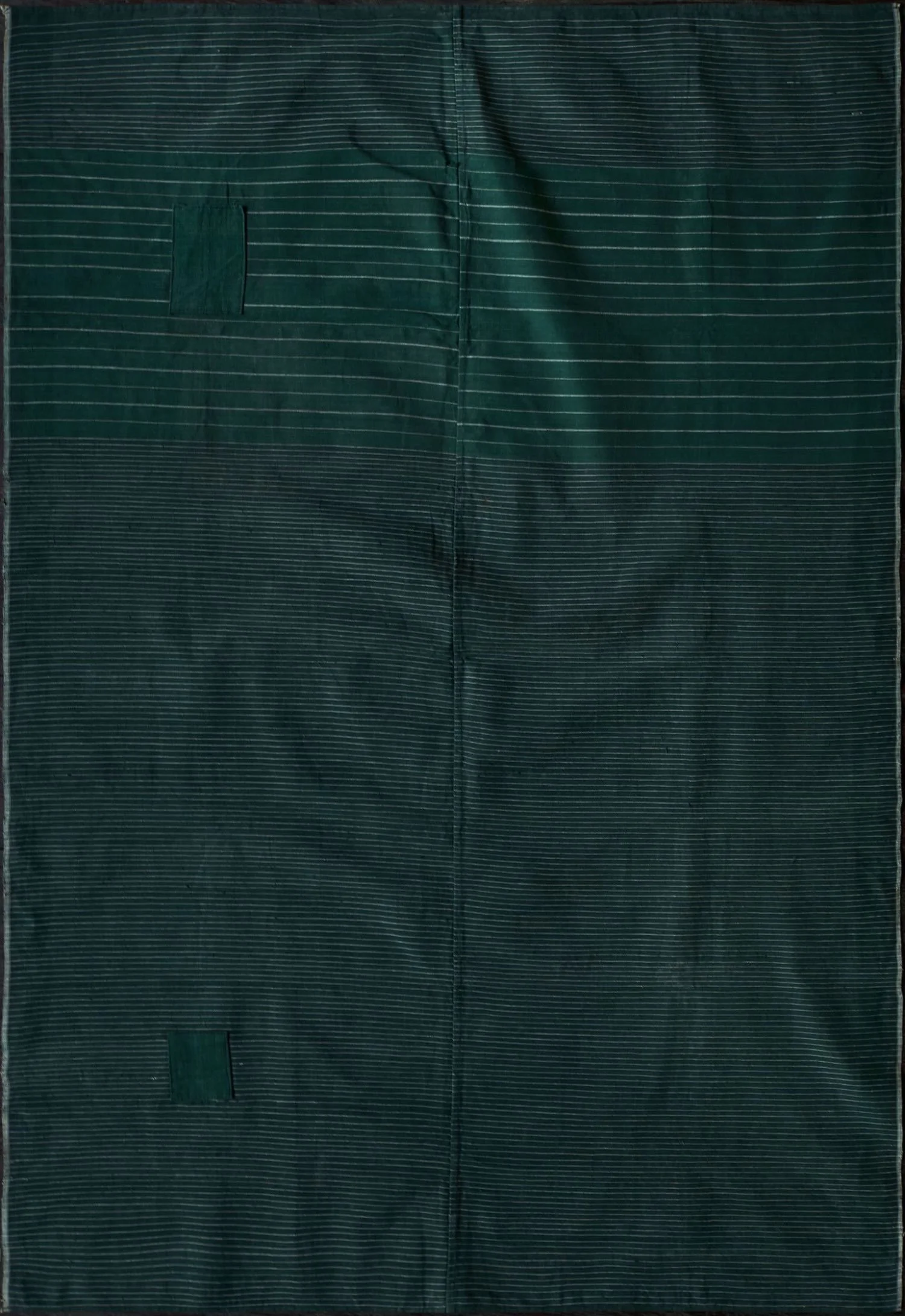
This sturdy, unadorned textile is composed of two panels, each with a distinct linear motif. Its structure suggests it may once have served as a child’s ceremonial sarong, worn during rituals and festive occasions.
With time, small holes appeared which were patched using matching, or perhaps identical cloth. These visible repairs, together with the fabric’s simple design, convey a certain resilience and practicality, qualities often found in garments handed down or repeatedly used across generations.
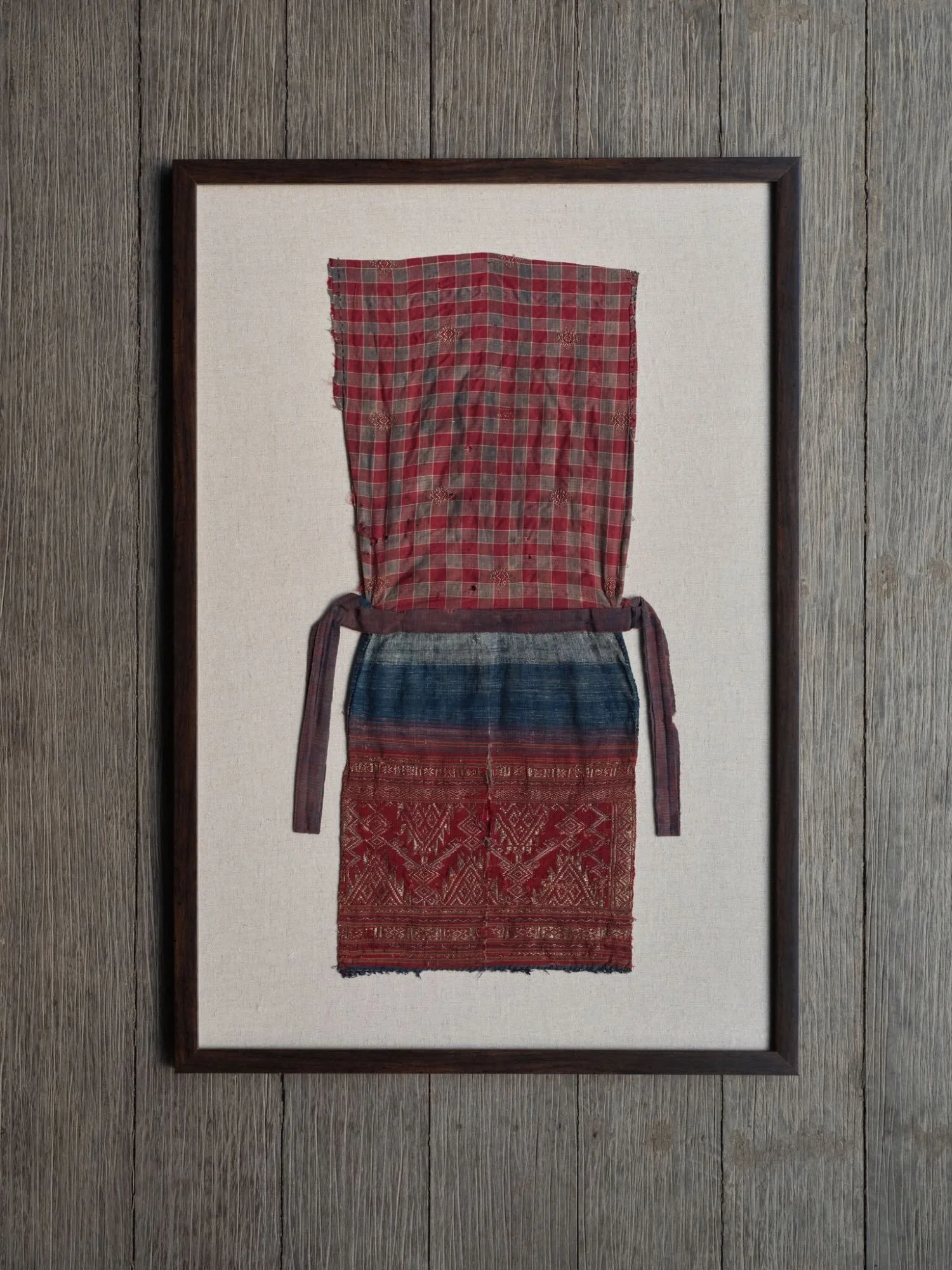
This small weathered ikat shoulder bag is from Sumatra and was once used by the Batak people. With irregular stitching, stains, and holes, it carries signs of life. This piece embodies stories of resilience, belonging, and the significance of everyday objects.
Discovered tucked away in a cupboard among other batik textiles, we liked its imperfections for their reflection of the beauty found in life’s wear and tear.
By framing it, we’d like to pay tribute to its owner creating an invisible memory in his/her/their honor.
This blue set features a Meiji period Katazome textile and an Onta ware black and blue bowl. The fabric, dating from the Meiji Period (1868–1912), has been dyed in deep indigo using the Katazome technique. In this method, a hand-cut stencil and rice paste are applied to the cloth to resist the dye, resulting in crisp, intricate patterns.
The motif depicted is Hana Karakusa, a curling vine design symbolizing longevity and good fortune, and traditionally considered auspicious in Japanese culture. Paired with the fabric is an Onta ware black and blue bowl, handmade in a small mountain village where pottery traditions have been passed down for over 300 years.
True to the Mingei spirit, Onta ware is known for its earthy glazes and simple, functional forms, embodying the spirit of Japanese folk craft and the beauty found in everyday objects.
Onta ware has been designated an Intangible Cultural Property of Japan in 1970, meaning that potters continue to work according to traditional methods and perpetuate an important old knowledge and savoir-faire. In 1995, Onta ware was upgraded to Important Intangible Cultural Property of Japan.