
Indigo Blue, Insights of a Pigment History
Indigo blue is not just a pigment or a color. It has a very long history that has shaped civilizations.
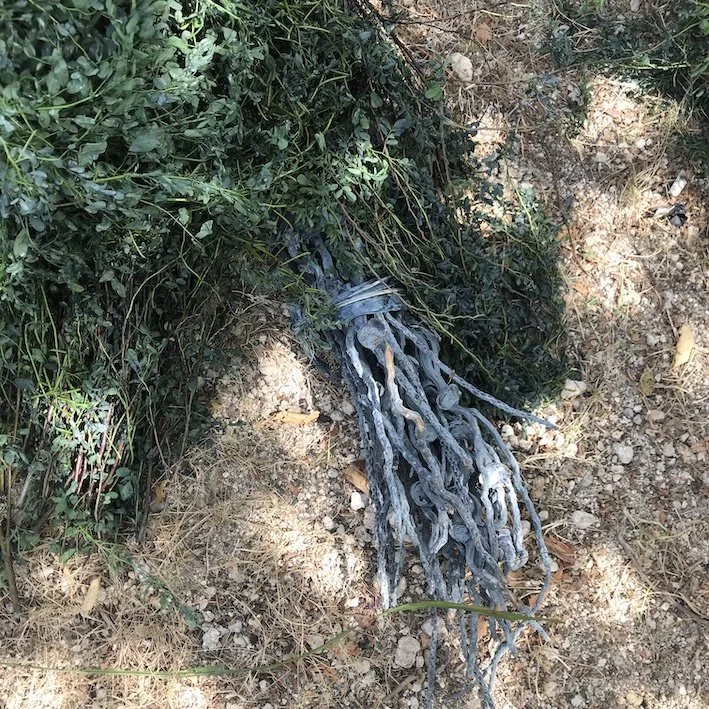
indigofera plant
Few years ago, the Smithsonian and the Scientific American journal reported that scraps of indigo-dyed fabric had been found at the Huaca Prieta, a pre-colombian site of the late Preceramic period (c. 3500–1800 BCE), located in today’s North of Peru. This artifact has been dated as 6,200 years old. Prior to this discovery, the oldest found indigo-dyed fabric was in Egypt dated 2,400 BC. Such discoveries indicate a long continuity across civilizations in the use of indigo dye. In many regions, people today still use Indigofera tinctoria and related species to dye textile, employing similar techniques. This speaks to the long-standing and geographically widespread nature of shared human practices.
Even more ancient, an international research team led by Professor Karen Hardy from the University of Glasgow, found the “earliest evidence of the use of blue dye in the archaeological record, dating back over 34,000 years. Prehistoric people in Georgia were using stone pebbles to grind the leaves of Isatis tinctoria, also known as dyers woad, a plant known today for producing indigo dye.” According to the researchers, these recent discoveries illustrate the complexity of the interaction between humans and plants, not only for food but also for dye-making and medicine. In the past, resources were used out of necessity, and objects or services were created to fulfill basic needs. Humans have been ingenious on how to use resources at our disposal to develop and sustain life, contributing to shaping cultures and traditions and leading to the development of ‘craftsmanship’ as we know it today. Indigo is one example: it has inspired not just centuries but millennia of craft techniques including the traditional Japanese tie-dye called shibori and aizome, the Japanese art of indigo dyeing. It also served as the coloring agent in Maya Blue, a durable pigment used in pre-Columbian Mesoamerican art.
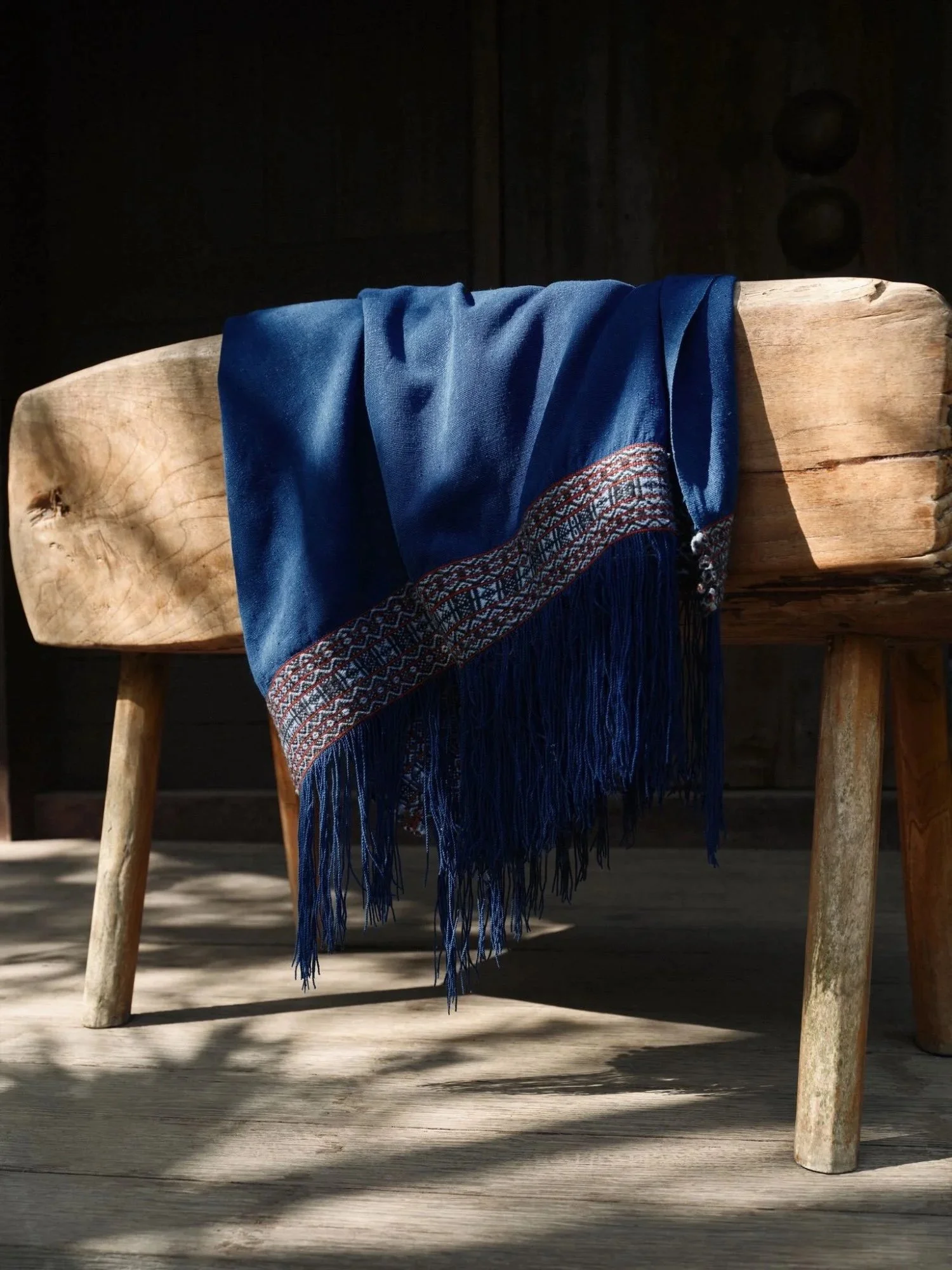
Large ikat from indonesia, naturally dyed in indigo
Indigo is also referred to as being the ‘blue gold’. It has been one of the most important commodities traded in the 18th and 19th centuries fueling slavery and colonialism. Indigo was traded on the Silk Road, from India, Central America, and the southern United States to textile markets in Europe. Indigo facilitated international investment and the development of new organizational forms such as trading companies, and early globalization by creating interconnected commodity chains around the world. Profits from the indigo trade, especially in India, supported the development of the British economy and helped fund Britain’s Industrial Revolution. In the American colonies, indigo exports supported both the local economy and projects like the Revolutionary War. Later, the Indigo Revolt of 1859–60 in India started an early, significant peasant movement that exposed colonial exploitation and influenced later agrarian and anti‑colonial mobilizations.
Indigofera, probably native to Southeast Asia, is a genus of 750 species growing in tropical and subtropical regions. Indigo tinctoria known as “true indigo” yields the richest dye. Indigofera suffruticosa (Guatemalan indigo) and Persicaria tinctoria (Japanese Indigo) are also used to create the magical blue. Today, chemical dyes are available in a wide range of colours simplifying dye processes (William Henry Perkin, an English chemist, is credited with inventing the first synthetic dye in 1856) but in many parts of the world, we continue to use the indigo pigment to dye textiles, in the same way that humans did more than 6,000 years ago. Indigo dye is distinct from other dyes due to the fact that it is chemically bonded by the fiber only after the reduced indigo is exposed to oxygen in the air. Indigo-dye provides much depth of colour and the process creates a depth and range of color coming from natural impurities. Indigo also does not require harsh chemicals and can produce a beautiful patina on textiles over time. It is the only natural dye that can achieve a permanent blue.
Across civilisations, indigo remains a symbol of tradition, power and resistance. The indigo color resonates with depth, sophistication, introspection, and spirituality. Indigo purple was the color of nobility during the Edo Period in Japan, it was also the color of the late singer, Prince. It is the color of the denim jeans that we wear today. It is a pigment that has inspired painters like Mark Rothko and Kandinsky. It is the color of the roof of the Shakespeare Globe Theater in London, symbolizing heaven.