
Matsu: a Life in the Forest
maison tombo's collection of curated objects tells stories and speaks of memories. This month, we're sharing the story of Matsu, a Shigaraki ware vessel from Shiga, Japan, once used to distill resin from pine trees into pine oil. Along the way, we'll also explore the symbolism of the pine tree itself, and its quiet and majestic presence that has long inspired artists and poets across Japan and East Asia.
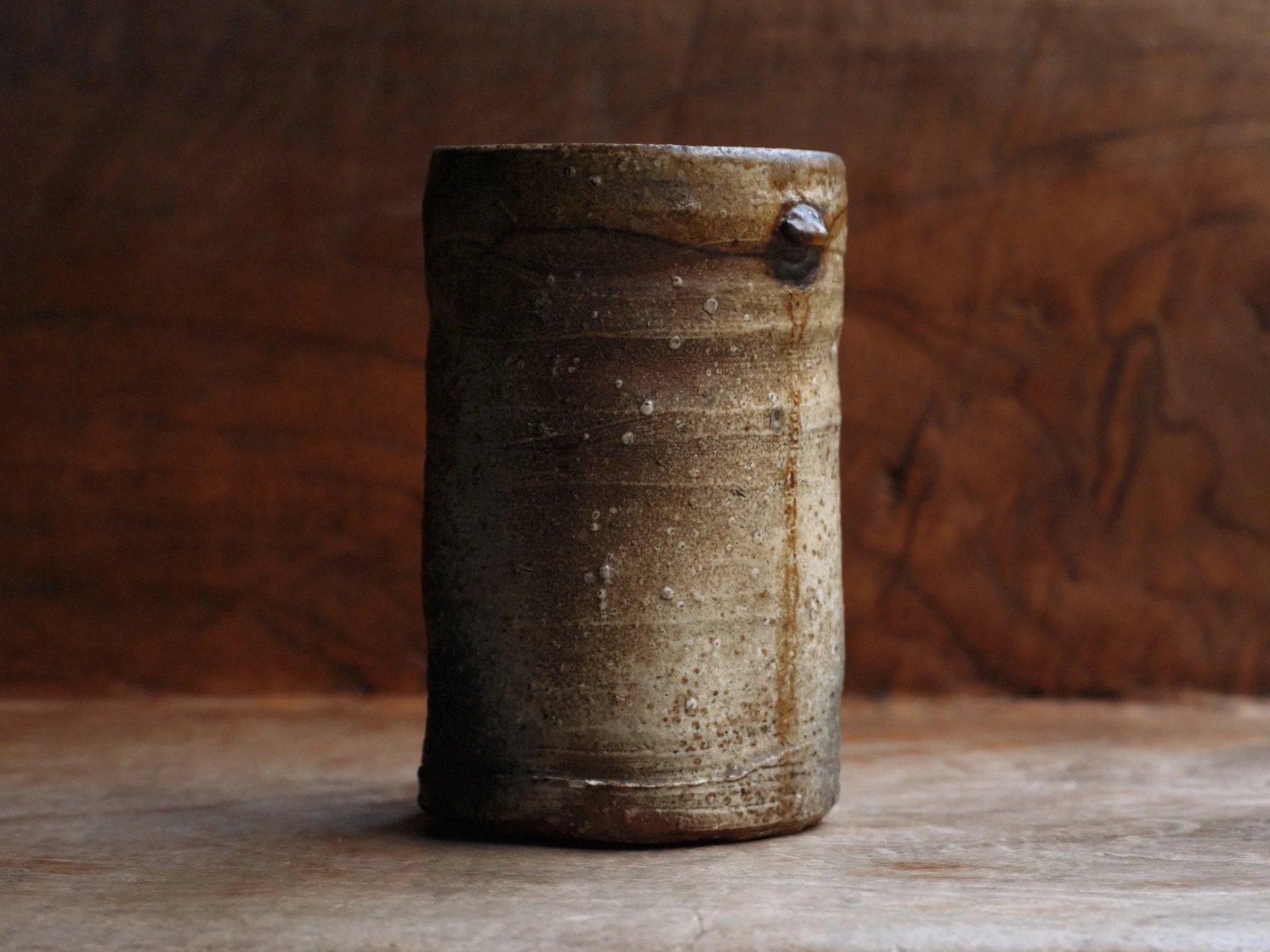
MATSU, shigaraki vessel once used to distill pine oil, japan
Now in maison tombo collection, Matsu, a Shigaraki ware vessel, once played a quiet and important role in the forests of Japan. It was used to distill resin, resinous wood chip, old pine roots or pine needles to produce pine tar, rosin or oil during the Edo Period (1615-1868). These pine derived products were indistinctively called matsuyani (松脂) in Japanese. The vessel's spout and its vertical residue streak running from its exterior until the bottom, as well as burn marks along its back wall collectively suggest that it was exposed to sustained heat and functioned as a collector for oil through distillation process. This process required vessels that were strong, porous, and dense, three defining characteristics of Shigaraki ware, a 800 years old pottery produced in Shiga Prefecture (East of Kyoto).
Shigaraki ware is one of the six Japanese most important kilns and itself is known for its strength and ability to withstand high temperatures, qualities that made it the perfect companion to the traditional craft of producing pine-derived products. Resin was collected from the bark of trees through a process called ‘Resin Tapping’ that traces its roots back to the Edo period and used by craftspeople and apothecaries. The traditional method of collecting resin involved tapping into the bark of the tree and cutting carefully a series of V shaped incisions under which a small vessel was placed, ready to receive the resin flowing from the bark. This was a seasonal practice, conducted in spring and summer, when warm temperatures would facilitate the flow of resin.
The most significant among several pine varieties found in Japan is the Pinus densiflora, Japanese red pine (akamatsu in Japanese), native to Japan, Korea, and northeastern China. Pine trees yield several types of products: pine tar (used to waterproof boats and ropes), rosin (for lacquer, varnish, and ink), and pine oil (distilled from resin or wood, used as a solvent, medicine, and fragrant oil).
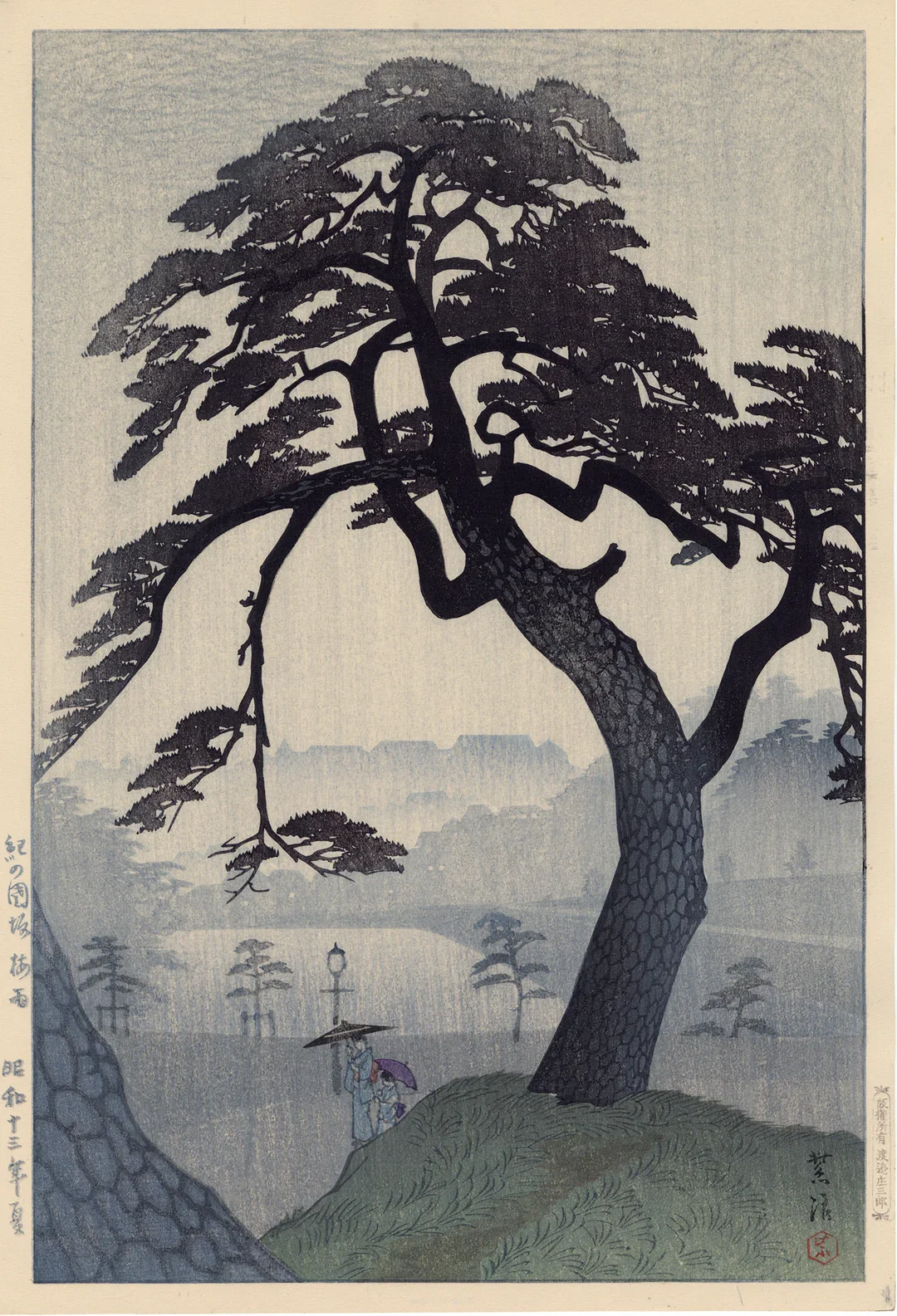
kasamatsu shirō, kinokunisaka in the rainy season , 1938. EGENOLF GALLERY
Beyond its function, Matsu carries a cultural symbolism of the pine tree in Japan and East Asia. Throughout history, pine trees have been valued not only for their practical uses, but also for their deeper symbolism. With their enduring green and steadfast presence, they have long represented resilience and longevity.
In East Asian tradition, the pine is among the "Three Friends of Winter" (歳寒三友, saikan no sanyu), alongside bamboo and plum blossom. These three trees endure the cold season without losing their vitality, making them a profound symbol of resilience, longevity, and moral constancy. In Japanese aesthetics, the pine tree is a significant source of inspiration in poetry, garden design, lacquerware, and ceramics because it bridges the wild and the cultivated. ‘Pine Forest’ painted by Hasegawa Tohaku (1539-1610), a six panel piece called byobu, is a National Treasure in Japan. It depicts pine trees on a faint background with a simplicity that leads us to think of Zen Buddhism. The swaying of trees may be a reference to the Noh dance which was very popular during the Momoyama period (1573-1615).
Pine trees make forests. They can also grow from a windswept cliff or be painstakingly shaped into a bonsai. Their majesty and resilience is a great source of inspiration for humanity. From a religious perspective, Japanese Shintoism considers ancient pines as Yorishiro, objects or places where spirits may dwell. A particularly old or gnarled pine at the edge of a village or shrine held near-sacred status.
The Kinokunisaka in the Rainy Season print by Kasamatsu Shirō (1938), shows a large pine tree in the foreground and two pedestrians walking under the tree acting like a protector to them. This is another majestic portrait of a pine tree as the main character, out of proportion symbolising strength and presence. Its shape is balanced and inviting, bending elegantly as in a dance, to protect the lady and her child from the rain.
This Shigaraki vessel, Matsu, tells us stories about how nature is a source of life and inspiration, practically and spiritually. Like a pine tree, it stands on its own to remind us of the power of nature and its connection to humanity.